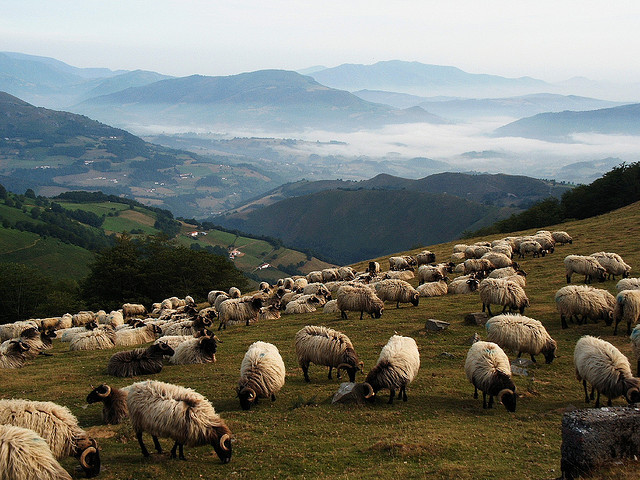
“While shepherds kept their watching Over silent flocks by night, Behold throughout the heavens, There shone a holy light: Go, Tell It On The Mountain, Over the hills and everywhere; Go, Tell It On The Mountain That Jesus Christ is born.”
from the Christian song, “Go Tell It On The Mountain”. “Go Tell It on the Mountain” is an African-American spiritual song, compiled by John Wesley Work, Jr., dating back to at least 1865, that has been sung and recorded by many gospel and secular performers. It is considered a Christmas carol because its original lyrics celebrate the Nativity of Jesus (Wikipedia.org)
I don’t care who you are. I don’t care what a bunch of superstitious sheep herders say. Birth is bloody and painful! If you are inhabiting a biological body on Earth, your mother sacrificed her body and her life to bear you and feed you with her tits (or a bottle) and work her ass off to support and clothe you until you were old enough to take care of yourself! The TRUTH is that this “religious holiday” should be a celebration and admiration of MOTHERS! In spite of ancient superstitions, and patriarchal propaganda, Jesus (if the guy ever really existed) inhabited a biological body that was produced by a women who fucked a man and got pregnant and gave birth to a stinking, screaming baby body, just like everyone else on this god-forsaken planet!
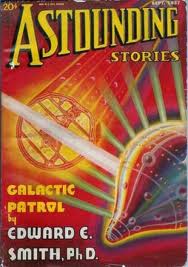
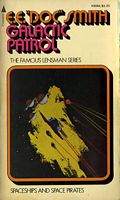
I recently re-read my favorite science fiction books, discovering that, like most prophetic literature, they must be studied carefully and repeatedly to perceive many subtle layers of understanding and insight embodied in the text of six books. In my opinion, the most revolutionary, groundbreaking and classic series of science fiction books ever published is The Lensman series. This series was written by Edward Elmer “Doc” Smith, PhD. All of the books in this profoundly important series are available in from Amazon.com (HERE) and the audiobook versions from Audible.com (HERE). If you are a fan of science fiction, high technology, or of spiritual phenomenon, these books are mandatory reference material.
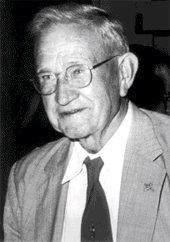
Edward Elmer Smith Ph.D. (also E. E. Smith, E. E. “Doc” Smith, Doc Smith, “Skylark” Smith, or—to his family—Ted) (May 2, 1890 – August 31, 1965) was an American food engineer (specializing in doughnut and pastry mixes) and early science fiction author, best known for the Lensman and Skylark series. He is sometimes called the father of space opera.
Another of my favorite writers is the iconic science fiction writer Robert A. Heinlein. He and Doc Smith were good friends. (Heinlein dedicated his 1958 novel Methuselah’s Children “To Edward E. Smith, Ph.D.”. Heinlein reported that E. E. Smith perhaps took his “unrealistic” heroes from life, citing as an example the extreme competence of the hero of Spacehounds of IPC. He reported that E. E. Smith was a large, blond, athletic, very intelligent, very gallant man, married to a remarkably beautiful, intelligent red-haired woman named MacDougal (thus perhaps the prototypes of ‘Kimball Kinnison’ and ‘Clarissa MacDougal’). In Heinlein’s essay, he reports that he began to suspect Smith might be a sort of “superman” when he asked Smith for help in purchasing a car. Smith tested the car by driving it on a back road at illegally high speeds with their heads pressed tightly against the roof columns to listen for chassis squeaks by bone conduction—a process apparently improvised on the spot.
In his non-series novels written after his professional retirement, Galaxy Primes, Subspace Explorers, and Subspace Encounter, E. E. Smith explores themes of telepathy and other mental abilities collectively called “psionics”, and of the conflict between libertarian and socialistic/communistic influences in the colonization of other planets.
Although the language, slang and cultural references are antiquated, I must continually remind myself that these books were written primarily during the 1930s! Long before atomic bombs became a reality, Doc Smith describes atomic and electronic weapons in detail. His technical conceptions and detailed descriptions of engines and spacecraft capable of interstellar, intergalactic, and hyper-spacial have no equal.
Doc Smith (an doughnut and cake mix engineer by trade in “real” life) conjures a fictionalized history of the human race (civilization) engendered and nurtured by a race of super-beings of infinite, incorporeal origins. The nemesis of Civilization are the equally intelligent and capable race of Edorians. A convergence of two galaxies co-mingled these antagonists onto an evolutionary battleground — perpetual warfare lasting billions of years. The parallels and contrasting behavior characteristics of the “good guys” vs “bad guys” reveal the essence of who we are, and could become on this planet.
George Lukas, creator of the Star Wars films relates in his autobiography that his films were inspired by the Lensman books. However, even these unprecedented films reveal only a dim shadow cast by the brilliant light of science fiction literature created by Doc Smith. The characters, conflicts, technology he describes are so hauntingly “real” that one wonders whether Doc Smith wrote his stories as fantasies, or from his own “memory” as in infinitely ancient spiritual being, drawing from his the primordial past of “A long time ago, in a galaxy far, far away…“!
Originally, the Lensman Series was published in pulp fiction magazines. The complete series in sequence and their original publication dates are:
And, a sequel, The Vortex Blaster (1960. Published with the title Masters of the Vortex in 1968)
Originally, the series consisted of the final four novels published between 1937 and 1948. Smith rewrote his 1934 story Triplanetary, originally published in Amazing Stories, to fit in with the Lensman series. First Lensman was written in 1950 to act as a link between Triplanetary and Galactic Patrol and finally, in the years up to 1954, Smith revised the rest of the series to remove inconsistencies between the original Lensman chronology and Triplanetary.
Smith’s novels are generally considered to be the classic space operas, and he is sometimes called the “first nova” of twentieth century science fiction. Smith expressed a preference for inventing fictional technologies that were not strictly impossible (so far as the science of the day was aware) but highly unlikely: “the more highly improbable a concept is—short of being contrary to mathematics whose fundamental operations involve no neglect of infinitesimals—the better I like it” was his phrase.
For more detailed information about The Lensman Series and other books by EE Smith, and about this truly amazing man, read http://en.wikipedia.org/wiki/E._E._Smith
There are too many people on TV and the Internet demanding that we “believe” their version of “reality”, all of which are divergent, conflicting, self-contradictory, self-serving, or absurd. So, why waste your time and attention on “believing” anything when there is an ingenious labor-saving device called: The Electric Monk
(VIDEO CLIP BELOW NARRATED BY DOUGLAS ADAMS)
(from Dirk Gently’s Holistic Detective Agency by Douglas Adams)
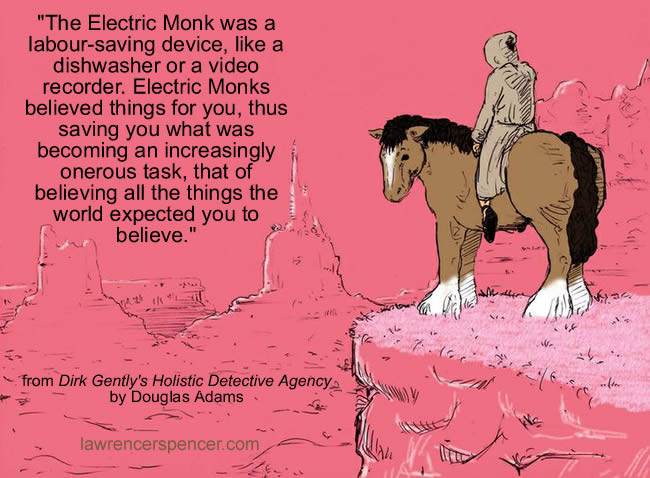
“High on a rocky promontory sat an Electric Monk on a bored horse. From under its rough woven cowl the Monk gazed unblinkingly down into another valley, with which it was having a problem.
The day was hot, the sun stood in an empty hazy sky and beat down upon the gray rocks and the scrubby, parched grass. Nothing moved, not even the Monk. The horse’s tail moved a little, swishing slightly to try and move a little air, but that was all. Otherwise, nothing moved.
The Electric Monk was a labour-saving device, like a dishwasher or a video recorder. Dishwashers washed tedious dishes for you, thus saving you the bother of washing them yourself, video recorders watched tedious television for you, thus saving you the bother of looking at it yourself; Electric Monks believed things for you, thus saving you what was becoming an increasingly onerous task, that of believing all the things the world expected you to believe.
Unfortunately this Electric Monk had developed a fault, and had started to believe all kinds of things, more or less at random. It was even beginning to believe things they’d have difficulty believing in Salt Lake City. It had never heard of Salt Lake City, of course. Nor had it ever heard of a quingigillion, which was roughly the number of miles between this valley and the Great Salt Lake of Utah.
The problem with the valley was this. The Monk currently believed that the valley and everything in the valley and around it, including the Monk itself and the Monk’s horse, was a uniform shade of pale pink. This made for a certain difficulty in distinguishing any one thing from any other thing, and therefore made doing anything or going anywhere impossible, or at least difficult and dangerous. Hence the immobility of the Monk and the boredom of the horse, which had had to put up with a lot of silly things in its time but was secretly of the opinion that this was one of the silliest.
How long did the Monk believe these things?
Well, as far as the Monk was concerned, forever. The faith which moves mountains, or at least believes them against all the available evidence to be pink, was a solid and abiding faith, a great rock against which the world could hurl whatever it would, yet it would not be shaken. In practice, the horse knew, twenty-four hours was usually about its lot.
So what of this horse, then, that actually held opinions, and was sceptical about things? Unusual behaviour for a horse, wasn’t it? An unusual horse perhaps?
No. Although it was certainly a handsome and well-built example of its species, it was none the less a perfectly ordinary horse, such as convergent evolution has produced in many of the places that life is to be found. They have always understood a great deal more than they let on. It is difficult to be sat on all day, every day, by some other creature, without forming an opinion on them.
On the other hand, it is perfectly possible to sit all day, every day, on top of another creature and not have the slightest thought about them whatsoever.
When the early models of these Monks were built, it was felt to be important that they be instantly recognisable as artificial objects. There must be no danger of their looking at all like real people. You wouldn’t want your video recorder lounging around on the sofa all day while it was watching TV. You wouldn’t want it picking its nose, drinking beer and sending out for pizzas.
So the Monks were built with an eye for originality of design and also for practical horse-riding ability. This was important. People, and indeed things, looked more sincere on a horse. So two legs were held to be both more suitable and cheaper than the more normal primes of seventeen, nineteen or twenty-three; the skin the Monks were given was pinkish-looking instead of purple, soft and smooth instead of crenellated. They were also restricted to just one mouth and nose, but were given instead an additional eye, making for a grand total of two. A strange looking creature indeed. But truly excellent at believing the most preposterous things.
This Monk had first gone wrong when it was simply given too much to believe in one day. It was, by mistake, cross-connected to a video recorder that was watching eleven TV channels simultaneously, and this caused it to blow a bank of illogic circuits. The video recorder only had to watch them, of course. It didn’t have to believe them as well. This is why instruction manuals are so important.
So after a hectic week of believing that war was peace, that good was bad, that the moon was made of blue cheese, and that God needed a lot of money sent to a certain box number, the Monk started to believe that thirty-five percent of all tables were hermaphrodites, and then broke down. The man from the Monk shop said that it needed a whole new motherboard, but then pointed out that the new improved Monk Plus models were twice as powerful, had an entirely new multi-tasking Negative Capability feature that allowed them to hold up to sixteen entirely different and contradictory ideas in memory simultaneously without generating any irritating system errors, were twice as fast and at least three times as glib, and you could have a whole new one for less than the cost of replacing the motherboard of the old model.
That was it. Done.
The faulty Monk was turned out into the desert where it could believe what it liked, including the idea that it had been hard done by. It was allowed to keep its horse, since horses were so cheap to make.
For a number of days and nights, which it variously believed to be three, forty-three, and five hundred and ninety-eight thousand seven hundred and three, it roamed the desert, putting its simple Electric trust in rocks, birds, clouds, and a form of non-existent elephant-asparagus, until at last it fetched up here, on this high rock, overlooking a valley that was not, despite the deep fervour of the Monk’s belief, pink. Not even a little bit.
“I have more respect for people who change their views after acquiring new information than for those who cling to views they held thirty years ago. The world changes. Ideologues and zealots don’t.”
― Michael Crichton, State of Fear
“For the last fifteen years we have been under the control of an entirely new complex, far more powerful and far more pervasive. I call it the politico-legal-media complex. The PLM. ”
― Michael Crichton, State of Fear
“I have great respect for the corrosive influence of bias, systematic distortions of thought, the power of rationalization, the guises of self-interest, and the inevitability of unintended consequences.”
― Michael Crichton, State of Fear

 “While shepherds kept their watching