Republished by Blog Post Promoter
Category Archives: ART
Paintings, photography, aesthetic objects, beautiful communication, and anything I consider to be art, artful, artistic, artsy or whatever.
Art is subjective. It is a quality of communication can be contributed to by the viewer through empathy or agreement with its creator.
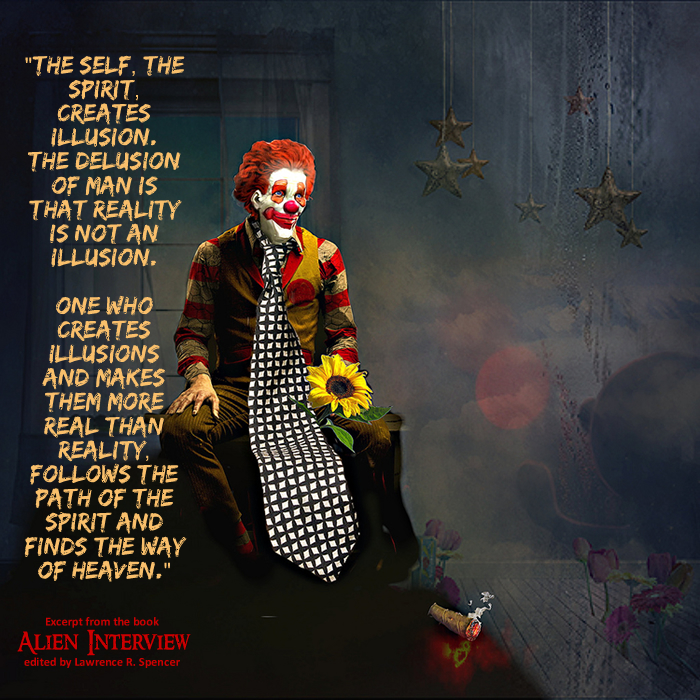
THE DELUSION OF MAN
Republished by Blog Post Promoter
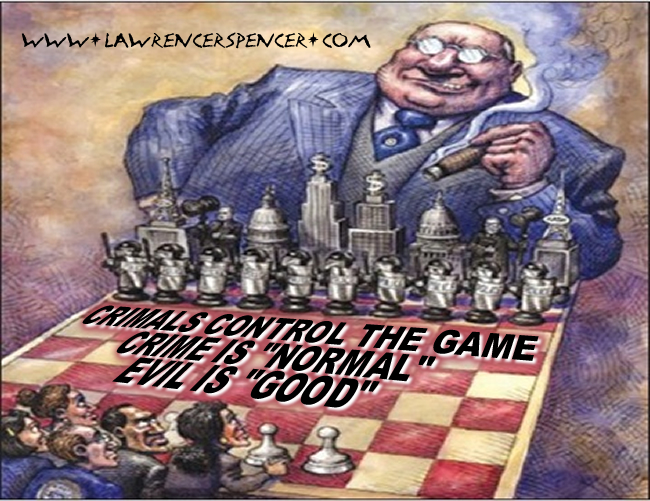
CRIME IS “NORMAL”
Republished by Blog Post Promoter
 Naturally, an healthy life organism acts to increase the well-being, health, good-fortune, sustainability and longevity of itself and others who are inter-dependent for mutual survival. On Earth, the “food chain” in nature dictates a “hierarchy of evil” (depending on the point of view of the eater vs the eaten). When a sea lion kills and eats a penguin this is “normal”. No “crime” has been committed — from the point of view of the sea lion.
In human society, when one man kills another, or steals his possessions, it is conceived that this man is “evil” and has committed a “crime” — from the point of view of the victim. If entire nations of killers invade a defenseless people who are unable to invoke “law” or “justice” or “revenge”, then no “crime” has been committed — from the point of view of the killers.
Examples of “evil” behavior and activities of this kind are “normal” through the entire history of human society, whether conducted by brutal military conquest, religious indoctrination or financial swindle, theft or deception.
Logically, if “evil” or “crime” is “normal for human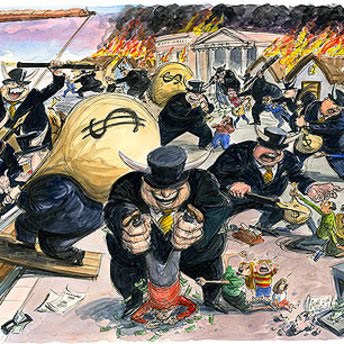
Definition of “CRIME”
noun: an evil act not necessarily punishable by law
Definition of “EVIL”
noun: that which causes harm or destruction or misfortune
adjective: having or exerting a malignant influence
Therefor, by extrapolation, the definition of “CRIMINAL” would be:
An individual, entity, organization or group of individual entities acting or prohibiting action, which acts or exerts malignant influences to create destruction, harm and misfortune, whether or not these influences or actions are punishable by law — from the point of view of the victim.
Therefor, by logical extension, the greater the magnitude of harm, destruction or misfortune caused indicates the degree to which a person, or entity is criminal. Historically, on Earth, the very BIG criminals can usually be observed to operate and control several fundamental human activities:
1- Finance, 2- Culture/Education/Religion, 3 – Legislation/Government, 4- Industry/Commerce, 5- Military, 6- Labor, 7- Natural Resources (consumed by humans), and 8- Geographic Territory (occupied by humans), 9- Technology.
Historically, as in current “civilization”, one could apply this definition of “criminal” to Bankers, Educators, Religions, Legislators, Politicians, Industrialists, Corporations, Energy/Food/Materials Suppliers, Government Contractors, Military leaders, Soldiers, Employers, Real Estate Owners, Scientists and Engineers, as well a individual people.
When the “criminals” control playing board and make up their own rules, there is no “evil”. “Crime” is “normal”.
— Lawrence R. Spencer. 2015.
PHOTO OF VAN GOGH SELFY?
Republished by Blog Post Promoter
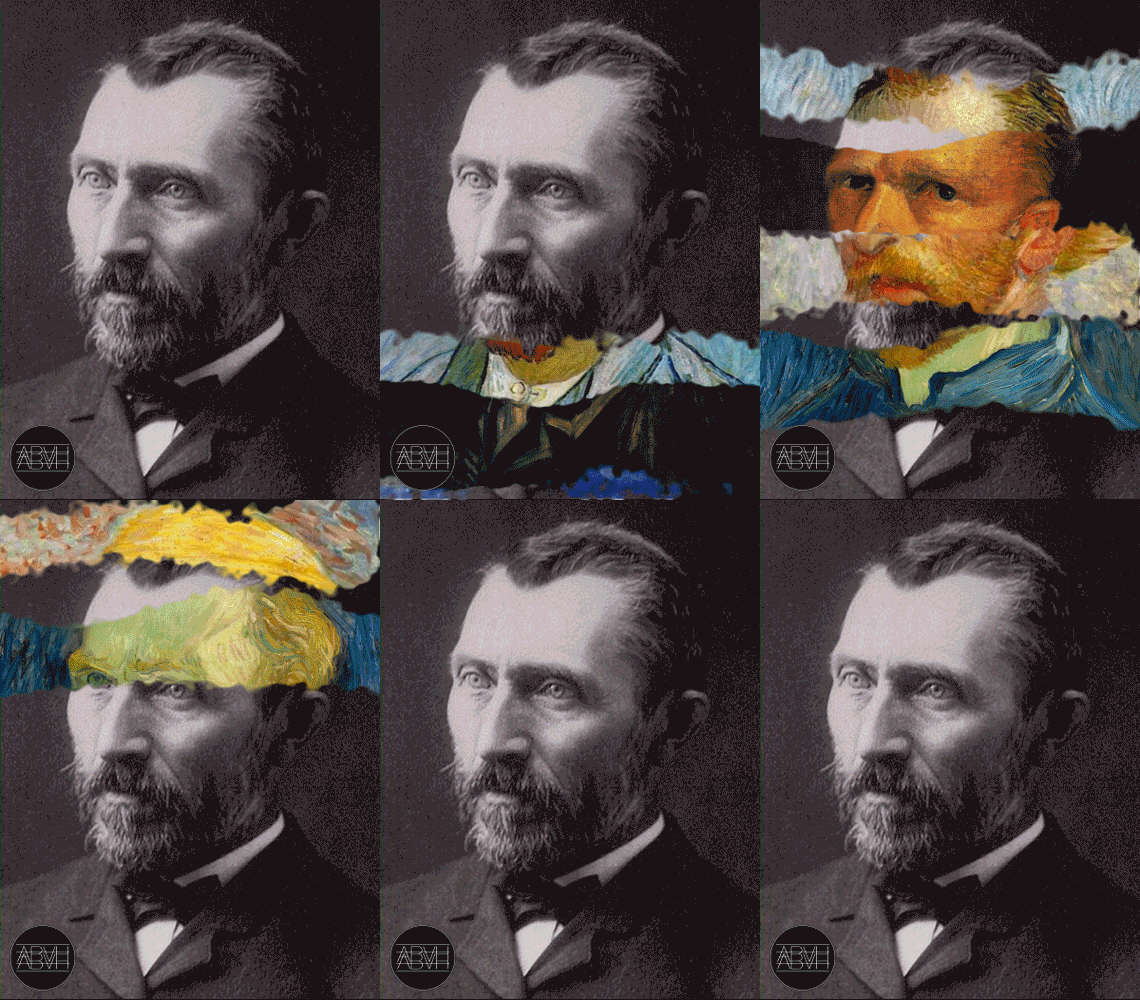
Here is an interesting animated GIF with an overlay of a photograph against “selfy” paintings of Vincent van Gogh. As far as I know, there is no known photograph of tthe artist. This could be the only one.
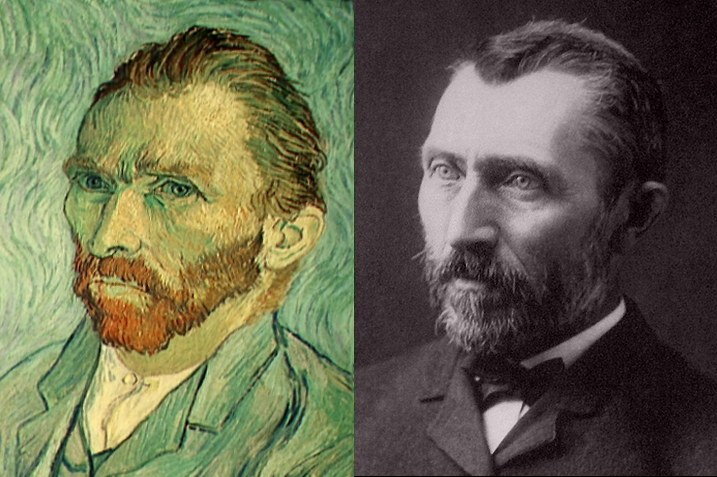
Vincent Willem van Gogh (30 March 1853 – 29 July 1890) was a Post-Impressionist painter of Dutch origin whose work—notable for its rough beauty, emotional honesty, and bold color—had a far-reaching influence on 20th-century art. After years of painful anxiety and frequent bouts of mental illness, he died aged 37 from a gunshot wound, generally accepted to be self-inflicted (although no gun was ever found).
He began to draw as a child, and he continued to draw throughout the years that led up to his decision to become an artist. He did not begin painting until his late twenties, completing many of his best-known works during the last two years of his life. In just over a decade, he produced more than 2,100 artworks, consisting of 860 oil paintings and more than 1,300 watercolors, drawings, sketches, and prints. His work included self portraits, landscapes, still lifes, portraits as well as paintings of cypresses, wheat fields and sunflowers.
He spent his early adulthood working for a firm of art dealers, traveling between The Hague, London, and Paris, after which he taught for a time in England at Isleworth and Ramsgate. One of his early aspirations was to become a pastor, and from 1879 he worked as a missionary in a mining region in Belgium, where he began to sketch people from the local community. In 1885, he painted his first major work, entitled The Potato Eaters. His palette at the time consisted mainly of somber earth tones and showed no sign of the vivid coloration that distinguished his later work. In March 1886, he moved to Paris and discovered the French Impressionists. Later, he moved to the south of France and was influenced by the strong sunlight he found there. His work grew brighter in color, and he developed the unique and highly recognizable style that became fully realized during his stay in Arles in 1888. The extent to which his mental health affected his painting has been a subject of speculation since his death. Despite a widespread tendency to romanticize his ill health, modern critics see an artist deeply frustrated by the inactivity and incoherence brought about by his bouts of illness. According to art critic Robert Hughes, Van Gogh’s late works show an artist at the height of his ability, completely in control and “longing for concision and grace”. (Wikipedia.org)
WHEN I DIE…
Republished by Blog Post Promoter