Republished by Blog Post Promoter
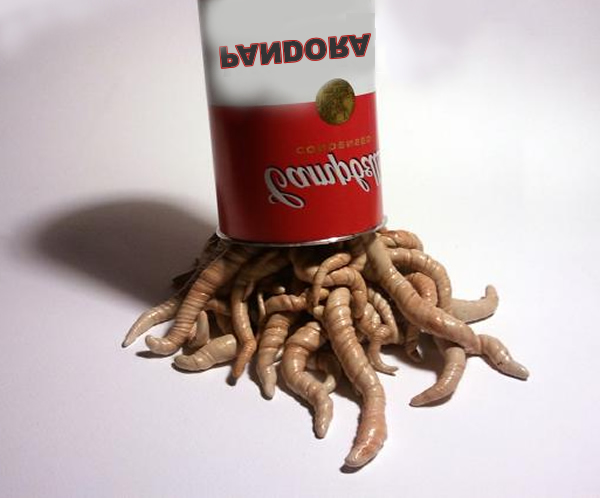 Metaphorically speaking, to open a “can of worms” means to inadvertently create numerous new problems while trying to solve one. Example: “Corruption in politics is such a can of worms that many journalists won’t take the risk of seriously investigating it.”
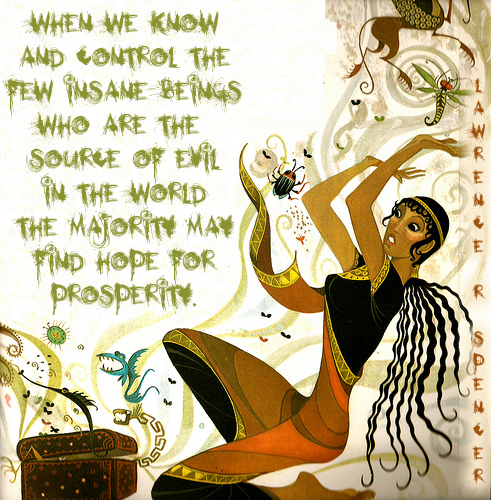
The “open a can of worms” metaphor is a modern extension of Pandora’s Box. In the original story, a mortal was warned not to open a box belonging to Pandora. When curiosity got the best of this mortal, she opened the box and inadvertently released numerous plagues on the world. According to legend, after all the destruction was released from the box the only thing remaining in Pandora’s box was Hope.
The “lesson” we are supposed to “learn” from the Pandora fable is this: “As long as the “can” remained sealed, there would be no harm”. Have Hope. And don’t ever look into the box where all the creepy, nasty creatures are hiding!
However, if we are want to have “Truth and Justice” or “Peace and Prosperity” in this world, we have to be willing to open Pandora’s Can of Worms. If we don’t identify and control the individual beings who are the source of crime, corruption, insanity, poverty, they will escape capture and continue creating chaos in the world. Once they’re out of the can, it’s a real bitch putting them back in again.
Fortunately, there are only a relatively small number of beings in the world who are responsible for the chaos and pestilence of society. They are criminals, bankers, politicians, military madmen and the scientific and artistic robots who make their destructive activities seem “reasonable”. The madmen who create chaos are the same lunatics who hire media moguls, performers, film makers to “sanitize”, and “beautify” and “glorify” war, crime and insanity. BEWARE: They are just as crazy and criminal as the madmen they work for.
Go ahead and open Pandora’s Can of Worms! We already know what happens when we don’t. We can’t control what we can’t see.