Republished by Blog Post Promoter

FLYING HAIKU by Lawrence R. Spencer
FLYING CONQUERS EARTH
SPACE DOES NOT CONFINE THE SOUL
SPIRITS TRANSCEND DEATH

Republished by Blog Post Promoter
FLYING HAIKU by Lawrence R. Spencer
FLYING CONQUERS EARTH
SPACE DOES NOT CONFINE THE SOUL
SPIRITS TRANSCEND DEATH
Republished by Blog Post Promoter
Republished by Blog Post Promoter
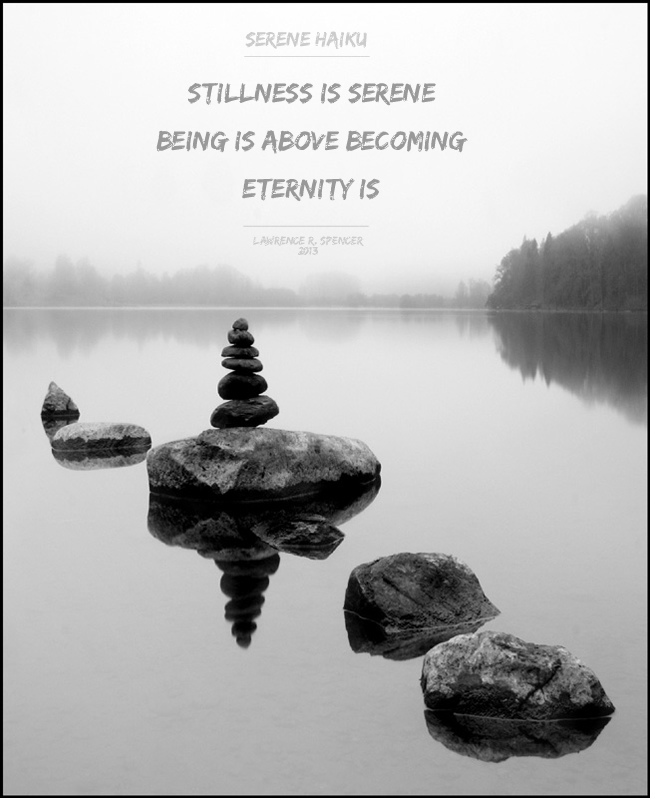
haiku, unrhymed Japanese poetic form consisting of 17 syllables arranged in three lines of 5, 7, and 5 syllables respectively. The term haiku is derived from the first element of the word haikai (a humorous form of renga, or linked-verse poem) and the second element of the word hokku (the initial stanza of a renga). The hokku, which set the tone of a renga, had to mention in its three lines such subjects as the season, time of day, and the dominant features of the landscape, making it almost an independent poem. The hokku (often interchangeably called haikai) became known as the haiku late in the 19th century, when it was entirely divested of its original function of opening a sequence of verse; today even the earlier hokku are usually called haiku.
Originally, the haiku form was restricted in subject matter to an objective description of nature suggestive of one of the seasons, evoking a definite, though unstated, emotional response. The form gained distinction in the 17th century, during the Tokugawa period, when the great master Bashō elevated the hokku, as it was then known, to a highly refined and conscious art. Haiku has since remained the most popular form in Japanese poetry.
Republished by Blog Post Promoter

Republished by Blog Post Promoter