Republished by Blog Post Promoter
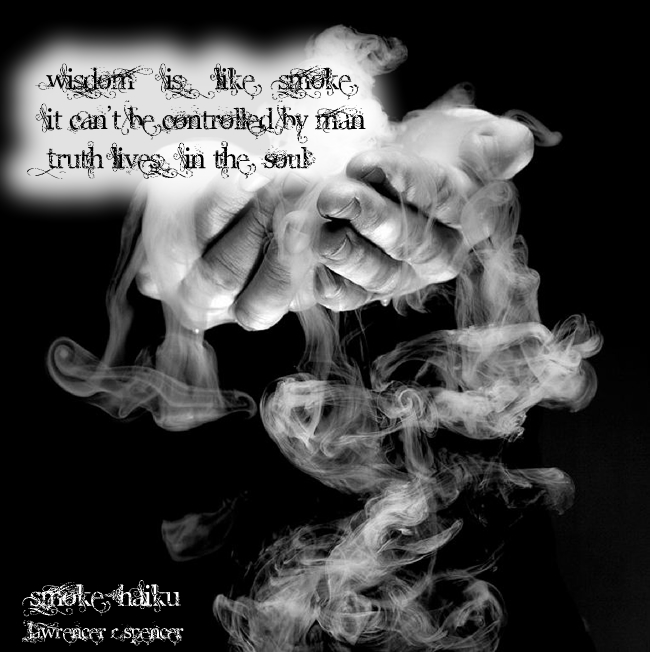
SMOKE HAIKU by Lawrence R. Spencer
Wisdom is like smoke
it can’t be controlled by man
Truth lives in the Soul

Republished by Blog Post Promoter
SMOKE HAIKU by Lawrence R. Spencer
Wisdom is like smoke
it can’t be controlled by man
Truth lives in the Soul
Republished by Blog Post Promoter

MOURNING FOOL HAIKU
Fools Mourn Romantic Flowers
Delusions Dreamed Are Never Real
Love Dissolves Like Misty Clouds.
_________________
Lawrence R. Spencer. 2013.
Republished by Blog Post Promoter
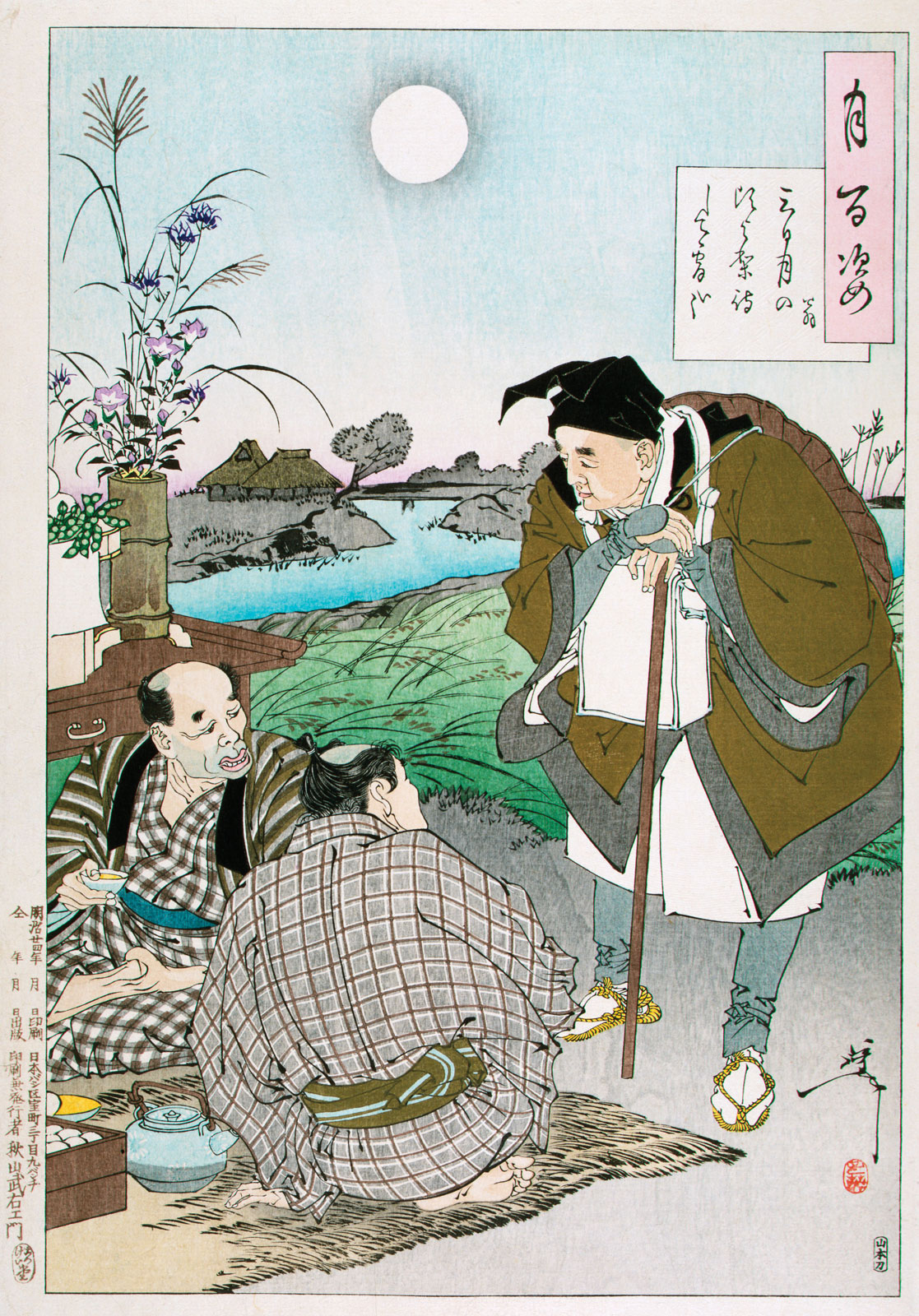
Here are a few of the wonderful *Haiku poems attributed to Bash (they may not have retained their purity in the English translation, but you get the flavour of them):
An old pond!
A frog jumps in-
The sound of water.
____________
The years first day
thoughts and loneliness;
the autumn dusk is here.
____________
Poverty’s child –
he starts to grind the rice,
and gazes at the moon.
____________
A weathered skeleton
in windy fields of memory,
piercing like a knife
____________
*DEFINITION OF HAIKU: Haiku is one of the most important form of traditional Japanese poetry. Haiku is, today, a 17-syllable verse form consisting of three metrical units of 5, 7, and 5 syllables. Since early days, there has been confusion between the three related terms Haiku, Hokku and Haikai. The termhokku literally means “starting verse”, and was the first starting link of a much longer chain of verses known ashaika. Because the hokku set the tone for the rest of the poetic chain, it enjoyed a privileged position in haikaipoetry, and it was not uncommon for a poet to compose ahokku by itself without following up with the rest of the chain.
The name Basho (banana tree) is a sobriquet he adopted around 1681 after moving into a hut with a banana tree alongside. He was called Kinsaku in childhood and Matsuo Munefusa in his later days.
Republished by Blog Post Promoter
Republished by Blog Post Promoter

A UNIVERSE IS
CREATING WHAT’S TRUE FOR YOU
MOMENT BY MOMENT
______________________________________________
Definition of “HAIKU” — noun: an epigrammatic Japanese verse form of three short lines. In contrast to English verse typically characterized by meter, Japanese verse counts sound units known as “on” or morae. Traditional haiku consist of 17 on, in three phrases of five, seven and five on respectively.