Republished by Blog Post Promoter
Click the link below to listen to an 11 minute excerpt from the NEW AUDIOBOOK version of the book “Sherlock Holmes: My Life”
( click on the link again when the window opens )


Republished by Blog Post Promoter
Click the link below to listen to an 11 minute excerpt from the NEW AUDIOBOOK version of the book “Sherlock Holmes: My Life”
( click on the link again when the window opens )
Republished by Blog Post Promoter

Republished by Blog Post Promoter
 Image credit: Jef Safi Flickr set
Republished by Blog Post Promoter
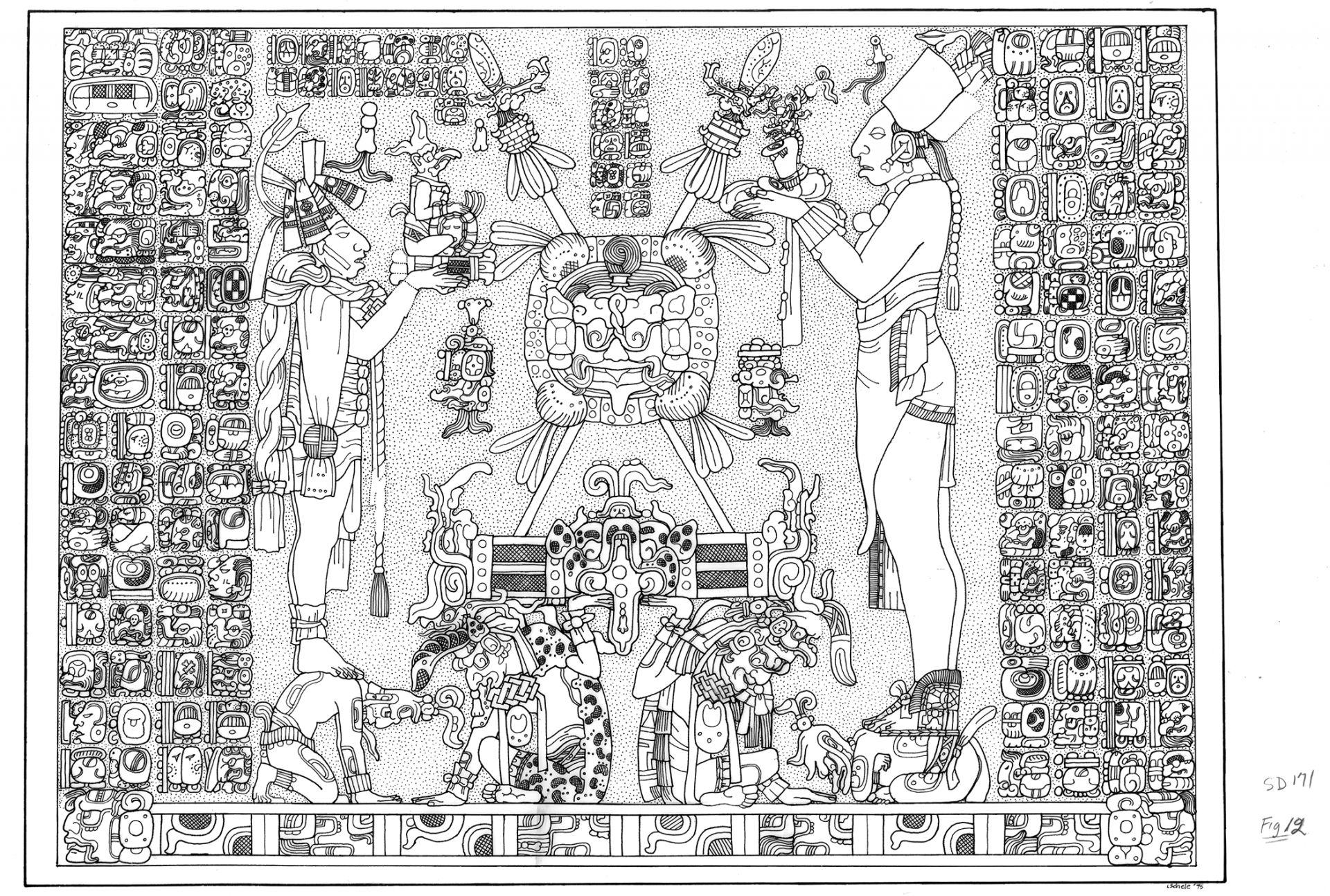 Drawing by Linda Schele (Click to enlarge) See more at http://ancientamericas.org/artist/linda-schele
The Maya Long Count calendar identifies a date by counting the number of days from the Mayan creation date 4 Ahaw, 8 Kumk’u (August 11, 3114 BCE). The mathematical and astronomic sophistication of the Maya culture equaled or exceeded that of the Egyptians. The databases of “artwork” and hieroglyphs available in the LINKS BELOW clearly demonstrate the elegant and exquisite quality of the Maya.
Unfortunately for the Maya and for all of human civilization, only FOUR of thousands of books of written language of the Maya civilization were survived being burned by Catholic priests. The educated scribes who could read and write the highly technical and extraordinarily artistic hieroglyphic language of the Maya were murdered by the Catholic Church, and their minions, the Spanish soldiers.
However, thousands of images of Maya writing have been salvaged from photographs of pottery, engravings and stone monuments. Fortunately, there is a marvelous database of Maya vase photos by Justin Kerr and PDFs of writings, artworks, vases and other extremely rare artifacts of the Maya civilization on the following website: http://research.mayavase.com/ In addition, a mind-boggling database of detailed drawing by Mayan Archaeologist, Linda Schele, can be seen at the link below: http://ancientamericas.org/artist/linda-schele
Investigation in the the origins of all of the “pyramid civilizations” the clutter the entire planet have not resulted in any comprehensive or fundamental understanding as the where they came from, who built them. Further, no one seems to really comprehend the vast technical, mathematical, and cultural complexities of any of these ancient and extinct civilizations of Earth. Like Atlantis and Lemuria they have sunken beneath an ocean of incomprehensible mystery.
However, when you read the book ALIEN INTERVIEW, the information revealed in 1947 by the pilot of the crashed UFO at Roswell, N.M., provides a much for complete and detailed understanding of the so-called “Creation” of the Maya and other mysterious “Pyramid Civilizations” which appeared suddenly around the entire planet! Here is an excerpt from the book that describes when and how these civilizations appeared on Earth:
“3,200 BCE — As I mentioned earlier, Earth was under attack between The Domain and the “Old Empire” forces during this period. Of course this does not make any sense to archaeologists or historians on Earth, because the Egyptian period is a space opera era period. Since Earth historians have amnesia, they assume that this was only a religious period.
 Further, because the technology and civilizations installed on Earth during this period were “pre-packaged”, they did not “evolve” on Earth. Of course, there is no evidence anywhere on Earth of an evolutionary transition which resulted in sophisticated mathematics, language, writing, religion, architecture, cultural traditions in Egypt or any of the pyramid civilizations. These cultures, complete with all of the details of racial body types, hair-styles, facial make-up, rituals, moral codes and so forth, just “appeared” as complete integrated packages.
The physical evidence suggests that all evidence of the intervention of The Domain or “Old Empire” Forces, or any other extraterrestrial activity, has been carefully “cleaned up”, so as not to create suspicion. The “Old Empire” force does not want the IS-BEs of Earth to suspect that they have been captured, transplanted to Earth and brainwashed.”
~ Excerpt from the book ALIEN INTERVIEW ( http://alieninterview.org/ )