Billie Holiday (April 7, 1915 – July 17, 1959) was an American jazz musician and singer-songwriter. Her vocal style, strongly inspired by jazz instrumentalists, pioneered a new way of phrasing and tempo.
Angelina Jordan Astar (born 10 January 2006) a Norwegian singer who won the 2014 season of Norway´s Got Talent with more than 40 millions combined YouTube views.
“You, and every IS-BE on Earth, have participated in the creation of this universe. Even though you are now confined to a fragile body made of flesh; you live for only 65 short rotations of your planet around a star; you have been given overwhelming electric shock treatments to wipe out your memory; you must learn everything all over again each lifetime; in spite of all these circumstances, you are who you are and will always be. And, deep down, you still know that you are and what you know. You are still the essence of you.
How else can one understand the child prodigy? An IS-BE who plays concertos on a piano at three years of age, without formal training? Impossible, if they did not simply remember what they have already learned from thousands of lives spent in front of a keyboard in times untold, or on planets far away. They may not know how they know. They just know.” ~ Alien Interview
I am 2 years older than George RR Martin, the American author who spawned the Game of Thrones HBO television series. I was required to register for the US military “draft” (compulsory military conscription) when I turned 16 years old in 1962 by which time the Vietnam war had already been engaged for 7 years. (REFERENCE– https://en.wikipedia.org/wiki/Vietnam_War )
Like George, I registered for the “draft” as a “Conscientious Objector” because I believe that killing sentient beings is inherently barbaric and counter-survival for all beings.
The “Game of Thrones” TV series thoroughly visualizes the nature of PSYCHOPATHS who thrive on murder, lies, sexual perversion, pain, greed, treachery, and lust for personal power as the common denominator of those beings who aspire to be the “rulers” of men.
I was not immediately “drafted” into the Army because I was enrolled in college, which gave me a “deferment” from the draft. Meanwhile, many of my high school classmates who did not go to college went to Vietnam and were killed or wounded.
I soon became a member of the “anti-war movement”. I went to the California state capital building and tore up my “draft card”. I was certain that I would be arrested and imprisoned for not less than 4 years for this action.
However, two weeks later I received a letter from my local “draft board” which ordered me to report to the Oakland-Alameda Army Induction Center. I reported as ordered. I entered the induction center and began handing out anti-war leaflets to the naked men (18 year olds) who were standing in line to be processed into becoming “meat” for the war machine. An FBI agent pulled me aside and “interviewed” me for half an hour in a private office. I did not say a single word or answer any questions. He decided I was “insane” and told me to go home. Two years later I was married with a child and declared “exempt” from the military. Weird. The “logic” of the situation boggles the mind…..
All wars, in every era and universe, are created for the private interests of secret provocateurs who are cowards and parasites (bankers, politicians and other vicious psychopaths) of which Vietnam was just another instance of using public citizens to enable private greed and power. The war in Vietnam was provoked and financed by the Rothschild bankers and the “military-industrial-complex” (and their political minions) who wanted to control OIL and DRUGS production in the “Golden Triangle” of Southeast Asia.
Later, Afghanistan (and the Middle East) was invaded for by these same psychopaths to secure oil, natural gas, vast mineral mining reserves, opium, and strategic military positioning.
Since then the US military has been usurped to become the “global police force” for these same psychopaths. The Rothschild Zionist state of Israel covertly leads the way in Western politics to control the military might necessary to ensure that “the meek (cowards) shall inherit the Earth”.
The “Game of Thrones” is a metaphor. It is a cliche for every “civilization” of humans who ever existed and destroyed themselves, throughout time in the physical universe.
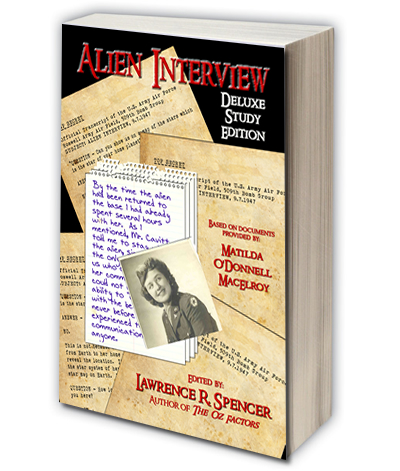
When we read the book ALIEN INTERVIEWwe become aware that immortal human-like beings have existed for trillions of years throughout the physical universe. The same “parasite games” have been played again and again and again and again in the Eternal Now.
The vast majority of beings are honest and decent — they want to live peacefully and calmly. A tiny percent of beings are vicious, destructive predators and parasites — they are the “rulers” who aspire to occupy “The Throne”.
A PARASITE (leach, vampire, priest, politician) cannot live without consuming the energy or sucking the blood of a “host” because PARASITES ARE NOT ABLE TO CREATE THEIR OWN ENERGY!
Ironically, when the host dies the parasite dies also. Obviously, Parasites are not only weak, they are stupid….. Therefore, the solution is to kill the parasites, just like any common virus. Kill the parasite and the host survives. What could be more obvious?
This is my recent review of the audio book David Copperfield, written by Charles Dickens and performed by Mr. Simon Vance:
“Charles Dickens defines the English language in application to the environs and inhabitants of his contemporary life with perfect eloquence and poignant emotion. David Copperfield, the novel, describes and embodies England and the English language at the pinnacle of its cultural power in the mid 1800s.
The narrative performance of this audio book by Mr. Simon Vance, of the myriad characterizations of persons and scenarios described or diverse diatribes of conversation conducted therein, cannot have been exceeded by the most eloquent thespian on any Shakespearean stage! Bravo, Bravo, Bravo Sir!
If you consider yourself a proponent of the English language this audio book is essential to sustaining your use of it and of expanding your appreciation of it mastery.
The delimitation of “rating” this book to “5 Stars” is a desecration of the monument and memory of Charles Dickens which shines eternally in The Heavens of Literature.”
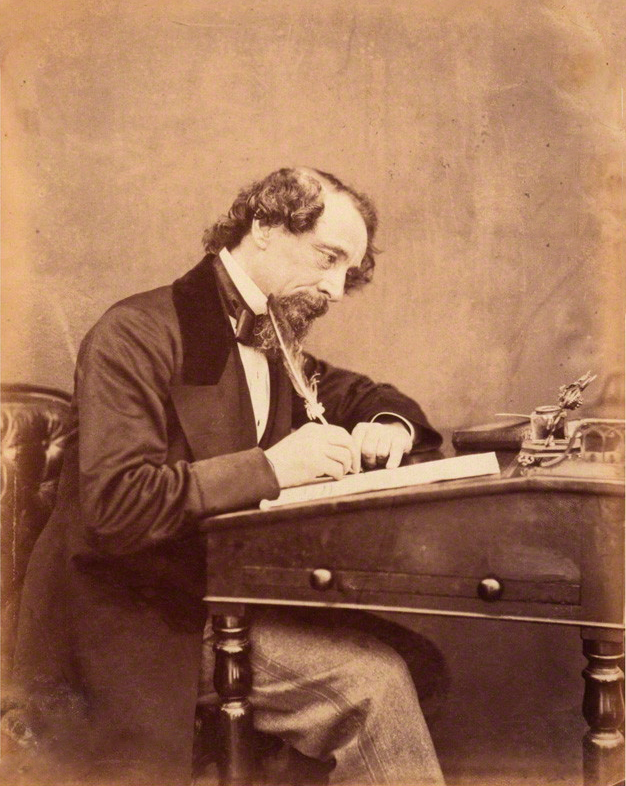
Charles John Huffam Dickens (7 February 1812 – 9 June 1870) was an English writer and social critic. He created some of the world’s best-known fictional characters and is regarded by many as the greatest novelist of the Victorian era.[1] His works enjoyed unprecedented popularity during his lifetime, and by the 20th century critics and scholars had recognised him as a literary genius. His novels and short stories enjoy lasting popularity.[2][3]
Born in Portsmouth, Dickens left school to work in a factory when his father was incarcerated in a debtors’ prison. Despite his lack of formal education, he edited a weekly journal for 20 years, wrote 15 novels, five novellas, hundreds of short stories and non-fiction articles, lectured and performed extensively, was an indefatigable letter writer, and campaigned vigorously for children’s rights, education, and other social reforms.
Dickens’s literary success began with the 1836 serial publication of The Pickwick Papers. Within a few years he had become an international literary celebrity, famous for his humour, satire, and keen observation of character and society. His novels, most published in monthly or weekly instalments, pioneered the serial publication of narrative fiction, which became the dominant Victorian mode for novel publication.[4][5] The instalment format allowed Dickens to evaluate his audience’s reaction, and he often modified his plot and character development based on such feedback.[5] For example, when his wife’s chiropodist expressed distress at the way Miss Mowcher in David Copperfield seemed to reflect her disabilities, Dickens improved the character with positive features.[6] His plots were carefully constructed, and he often wove elements from topical events into his narratives.[7] Masses of the illiterate poor chipped in ha’pennies to have each new monthly episode read to them, opening up and inspiring a new class of readers.[8]
Dickens was regarded as the literary colossus of his age.[9] His 1843 novella, A Christmas Carol, remains popular and continues to inspire adaptations in every artistic genre. Oliver Twist and Great Expectations are also frequently adapted, and, like many of his novels, evoke images of early Victorian London. His 1859 novel, A Tale of Two Cities, set in London and Paris, is his best-known work of historical fiction. Dickens has been praised by fellow writers—from Leo Tolstoy to George Orwell and G. K. Chesterton—for his realism, comedy, prose style, unique characterisations, and social criticism. On the other hand, Oscar Wilde, Henry James, and Virginia Woolf complained of a lack of psychological depth, loose writing, and a vein of saccharine sentimentalism. The term Dickensian is used to describe something that is reminiscent of Dickens and his writings, such as poor social conditions or comically repulsive characters.[10]
If you think elections in the US are crazy now, read the true story of the death of the Edgar Allan Poe, father of the modern “horror” novel:
“…it was raining in Baltimore on October 3, 1849, but that didn’t stop Joseph W. Walker, a compositor for the Baltimore Sun, from heading out to Gunner’s Hall, a public house bustling with activity. It was Election Day, and Gunner’s Hall served as a pop-up polling location for the 4th Ward polls. When Walker arrived at Gunner’s Hall, he found a man, delirious and dressed in shabby second-hand clothes, lying in the gutter. The man was semi-conscious, and unable to move, but as Walker approached the him, he discovered something unexpected: the man was Edgar Allan Poe.
On September 27—almost a week earlier—Poe had left Richmond, Virginia bound for Philadelphia to edit a collection of poems for Mrs. St. Leon Loud, a minor figure in American poetry at the time. When Walker found Poe in delirious disarray outside of the polling place, it was the first anyone had heard or seen of the poet since his departure from Richmond. Poe never made it to Philadelphia to attend to his editing business. Nor did he ever make it back to New York, where he had been living, to escort his aunt back to Richmond for his impending wedding. Poe was never to leave Baltimore, where he launched his career in the early 19th- century, again—and in the four days between Walker finding Poe outside the public house and Poe’s death on October 7, he never regained enough consciousness to explain how he had come to be found, in soiled clothes not his own, incoherent on the streets. Instead, Poe spent his final days wavering between fits of delirium, gripped by visual hallucinations.
Poe fell victim to a practice known as cooping, a method of voter fraud practiced by gangs in the 19th century where an unsuspecting victim would be kidnapped, disguised and forced to vote for a specific candidate multiple times under multiple disguised identities. Voter fraud was extremely common in Baltimore around the mid 1800s, and the polling site where Walker found the disheveled Poe was a known place that coopers brought their victims. The fact that Poe was found delirious on election day, then, is no coincidence.
Over the years, the cooping theory has come to be one of the more widely accepted explanations for Poe’s strange demeanor before his death. Before Prohibition, voters were given alcohol after voting as a sort of reward; had Poe been forced to vote multiple times in a cooping scheme, that might explain his semi-conscious, ragged state.
Around the late 1870s, Poe’s biographer J.H. Ingram received several letters that blamed Poe’s death on a cooping scheme. A letter from William Hand Browne, a member of the faculty at Johns Hopkins, explains that “the general belief here is, that Poe was seized by one of these gangs, (his death happening just at election-time; an election for sheriff took place on Oct. 4th), ‘cooped,’ stupefied with liquor, dragged out and voted, and then turned adrift to die.”
___________________
Extracted from http://www.smithsonianmag.com/history/still-mysterious-death-edgar-allan-poe-180952936/#twWUf4BeoOSM924V.99
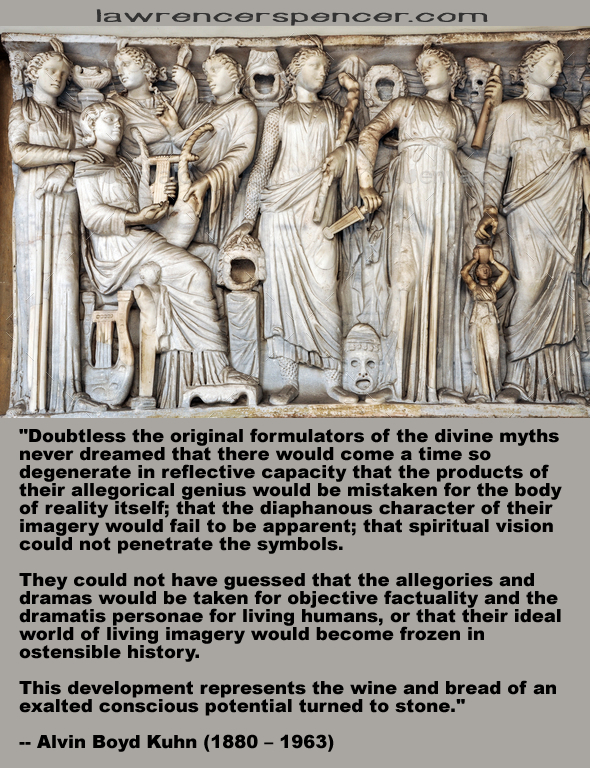
“Doubtless the original formulators of the divine myths never dreamed that there would come a time so degenerate in reflective capacity that the products of their allegorical genius would be mistaken for the body of reality itself; that the diaphanous character of their imagery would fail to be apparent; that spiritual vision could not penetrate the symbols. They could not have guessed that the allegories and dramas would be taken for objective factuality and the dramatis personae for living humans, or that their ideal world of living imagery would become frozen in ostensible history. This development represents the wine and bread of an exalted conscious potential turned to stone.” — Alvin Boyd Kuhn
—- —-
“Alvin Boyd Kuhn (September 22, 1880 – September 14, 1963) was an American Theosophist. A publisher who wrote books that he published himself and a lecturer, he was a proponent of the Christ myth theory.
Born in Franklin County, Pennsylvania, Kuhn studied the Ancient Greek language at university. He obtained his B.A. in 1903 and started his career working as a language teacher in high schools. He enrolled in summer sessions at Columbia University in 1926 and 1927, and then quit teaching to devote to full-time studies in 1927. His thesis, Theosophy: A Modern Revival of the Ancient Wisdom was, according to Kuhn, the first instance in which an individual has been “permitted” by any modern American or European university to obtain his doctorate with a thesis on Theosophy. Kuhn later expanded his thesis into his first book of the same name in 1930. After obtaining his Ph.D. in 1931, he returned to teaching for one year, but then spent the next 30 years writing, lecturing, and running his own publishing house, Academy Press in Elizabeth, New Jersey.
Highly influenced by the work of Gerald Massey and Godfrey Higgins, Kuhn contended that the Bible derived its origins from other Pagan religions and much of Christian history was pre-extant as Egyptian mythology. He also proposed that the Bible was symbolic and did not depict real events.” — Wikipedia.org

 treatments to wipe out your memory; you must learn everything all over again each lifetime; in spite of all these circumstances, you are who you are and will always be. And, deep down, you still know that you are and what you know. You are still the essence of you.