Republished by Blog Post Promoter
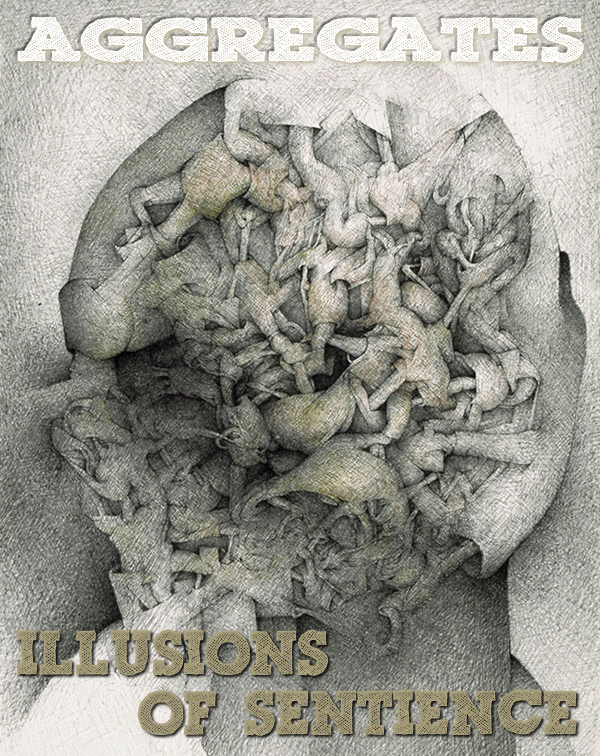 In the philosophy of consciousness, “sentience” can refer to the ability of any entity to have subjective perceptual experiences. This is distinct from other aspects of the mind and consciousness, such as creativity, intelligence, sapience, self-awareness, and intentionality (the ability to have thoughts that mean something or are “about” something). Sentience is a minimalistic way of defining “consciousness“, which is otherwise commonly used to collectively describe sentience plus other characteristics of the mind.
Eastern religions including Hinduism, Buddhism, Sikhism, and Jainism recognize non-humans as sentient beings.According to Buddhism, sentient beings made of pure consciousness are possible. In Buddhism, the concept is related to the Bodhisattva, an enlightened being devoted to the liberation of others. The first vow of a Bodhisattva states: “Sentient beings are numberless; I vow to free them.” Sentience in Buddhism is the state of having senses (sat + ta in Pali, or sat + tva in Sanskrit). In Buddhism, the senses are six in number, the sixth being the subjective experience of the mind. Thus, an animal qualifies as a sentient being.
In Buddhism the skandhas (or aggregates in English) are the five functions or aspects that constitute the human being. The Buddha teaches that nothing among them is really “I” or “mine”. Suffering arises when one identifies with or clings to an aggregate. Suffering is extinguished by relinquishing attachments to aggregates.
The five skandhas:
- “form” or “matter” external and internal matter. Externally, is the physical world. Internally, this includes the material body and the physical sense organs.
- “sensation” or “feeling”, sensing an objectas either pleasant or unpleasant or neutral.
- “perception”, “conception”, “apperception”, “cognition”, or “discrimination”, registers whether an object is recognized or not (for instance, the sound of a bell or the shape of a tree).
- “mental formations”, “impulses”, “volition”, or “compositional factors”, all types of mental habits, thoughts, ideas, opinions, prejudices, compulsions, and decisions triggered by an object.
- “consciousness” or “discernment”
The Buddhist literature describes the aggregates as arising in a linear or progressive fashion, from form to feeling, to perception, to mental formations to consciousness. In the early texts, the scheme of the five aggregates is not meant to be an exhaustive classification of the human being. Rather it describes various aspects of the way an individual manifests.
- Understanding suffering: the five aggregates are the “ultimate referent” in the Buddha’s elaboration on suffering in his First Noble Truth: “Since all four truths revolve around suffering, understanding the aggregates is essential for understanding the Four Noble Truths as a whole.”
- Clinging causes future suffering: the five aggregates are the substrata for clinging and thus “contribute to the causal origination of future suffering”.
- Release from samsara: clinging to the five aggregates must be removed in order to achieve release from samsara, literally meaning “continuous flow”, is the repeating cycle of birth, life, death and rebirth (reincarnation)
— I HAVE EXCERPTED THE TEXT ABOVE FROM VARIOUS ARTICLES AND LINKS FOUND IN WIKIPEDIA.ORG (LRS)