
Republished by Blog Post Promoter
Category Archives: POETIC NONSENSE
Poetry by Lawrence R. Spencer. Poetic nonsense by Lawrence R. Spencer and others. Haiku poems by Lawrence R. Spencer.

ALL WE NEED TO KNOW
Republished by Blog Post Promoter
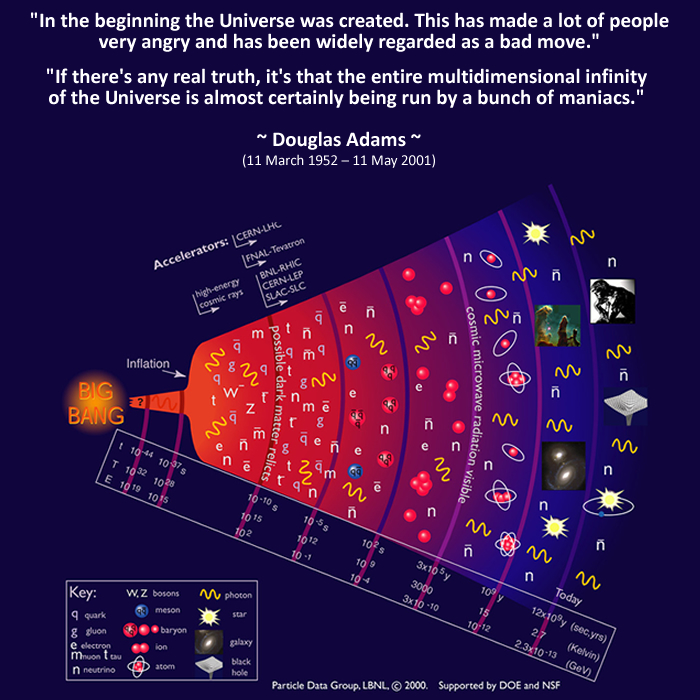 Everything we know, and need to know, to understand “the universe(s)” was stated simply and precisely by Douglas Adams. As one maniac to another, I think the universe is what we agree it is. – Lawrence R. Spencer
“In the beginning the Universe was created. This has made a lot of people very angry and has been widely regarded as a bad move.”
“If there’s any real truth, it’s that the entire multidimensional infinity of the Universe is almost certainly being run by a bunch of maniacs.”
REAL TO YOU
Republished by Blog Post Promoter
EVERYTHING YOU CAN IMAGINE IS REAL (TO YOU)
GLOBAMICA
Republished by Blog Post Promoter
GLOBAMICA = GLobal BAnkster Military-Industrial Corporations of Amuric
 “It was possible, no doubt, to imagine a society in which wealth, in the sense of personal possessions and luxuries, should be evenly distributed, while power remained in the hands of a small privileged caste. But in practice such a society could not long remain stable. For if leisure and security were enjoyed by all alike, the great mass of human beings who are normally stupefied by poverty would become literate and would learn to think for themselves; and when once they had done this, they would sooner or later realise that the privileged minority had no function, and they would sweep it away. In the long run, a hierarchical society was only possible on a basis of poverty and ignorance.”
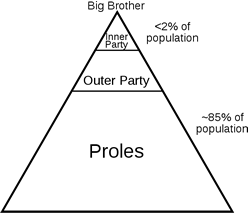 “The essential act of war is destruction, not necessarily of human lives, but of the products of human labour. War is a way of shattering to pieces, or pouring into the stratosphere, or sinking in the depths of the sea, materials which might otherwise be used to make the masses too comfortable, and hence, in the long run, too intelligent.”
― George Orwell, 1984
“We are not like that. We know that no one ever seizes power with the intention of relinquishing it. Power is not a means, it is an end. One does not establish a dictatorship in order to safeguard a revolution; one makes the revolution in order to establish the dictatorship. The object of persecution is persecution. The object of terrorism is terrorism. The object of oppression is oppression. The object of torture is torture. The object of murder is murder. The object of power is power.”
― George Orwell, 1984
― George Orwell, 1984
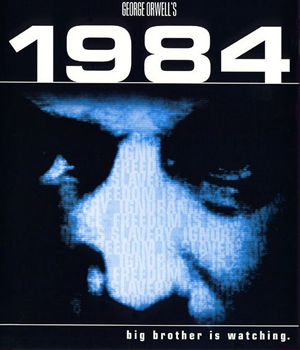
MAKE IT SO
Republished by Blog Post Promoter
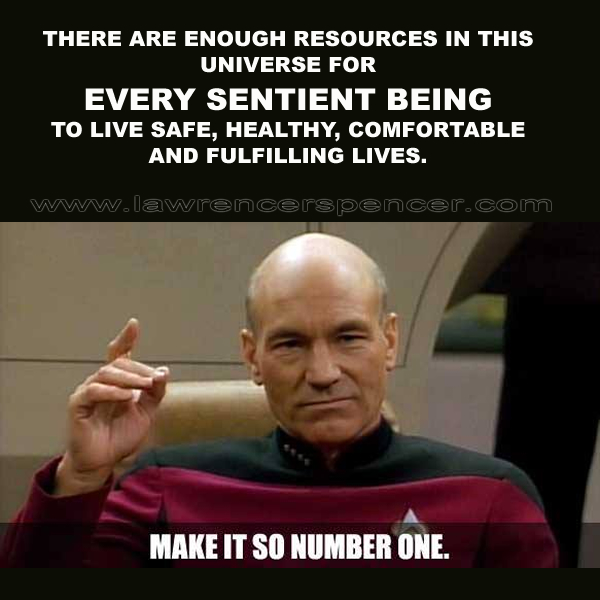
THERE ARE ENOUGH RESOURCES IN THIS UNIVERSE FOR EVERY SENTIENT BEING TO LIVE SAFE, HEALTHY, COMFORTABLE AND FULFILLING LIVES.
— www.lawrencerspencer.com —