Republished by Blog Post Promoter
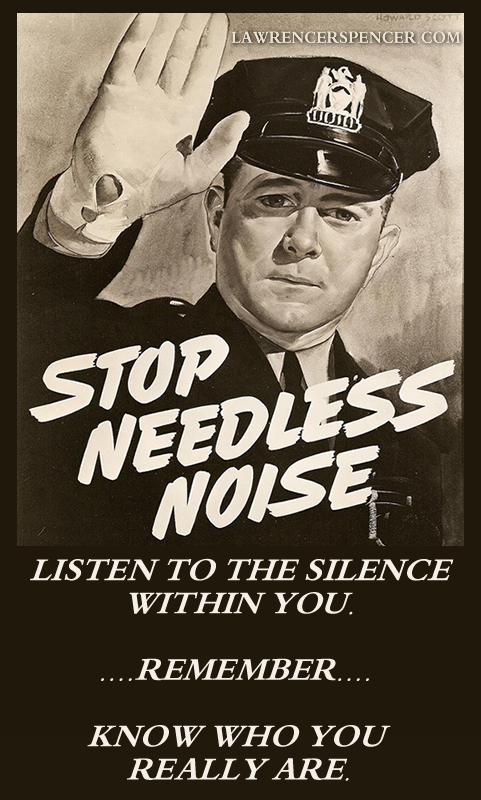
I just returned from 3 weeks without TV and other needless noise…. I realized how wonderful silence can be…. Serenity, Joy and Peace are a few benefits I experienced.

Picture Poems a poems written for, and pasted on, pictures, paintings or graphic art. The poem describes or emulated the picture in verse.
Republished by Blog Post Promoter
I just returned from 3 weeks without TV and other needless noise…. I realized how wonderful silence can be…. Serenity, Joy and Peace are a few benefits I experienced.
Republished by Blog Post Promoter
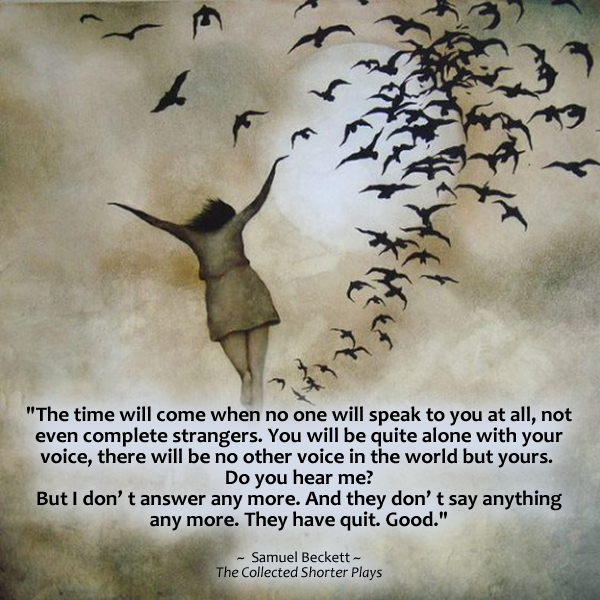 Samuel Barclay Beckett (13 April 1906 – 22 December 1989) was an Irish avant-garde novelist, playwright, theatre director, and poet, who lived in Paris for most of his adult life and wrote in both English and French. He is widely regarded as among the most influential writers of the 20th century.
Beckett’s work offers a bleak, tragicomic outlook on human existence, often coupled with black comedy and gallows humour, and became increasingly minimalist in his later career. He is considered one of the last modernist writers, and one of the key figures in what Martin Esslin called the “Theatre of the Absurd”. Beckett was awarded the 1969 Nobel Prize in Literature.
Republished by Blog Post Promoter
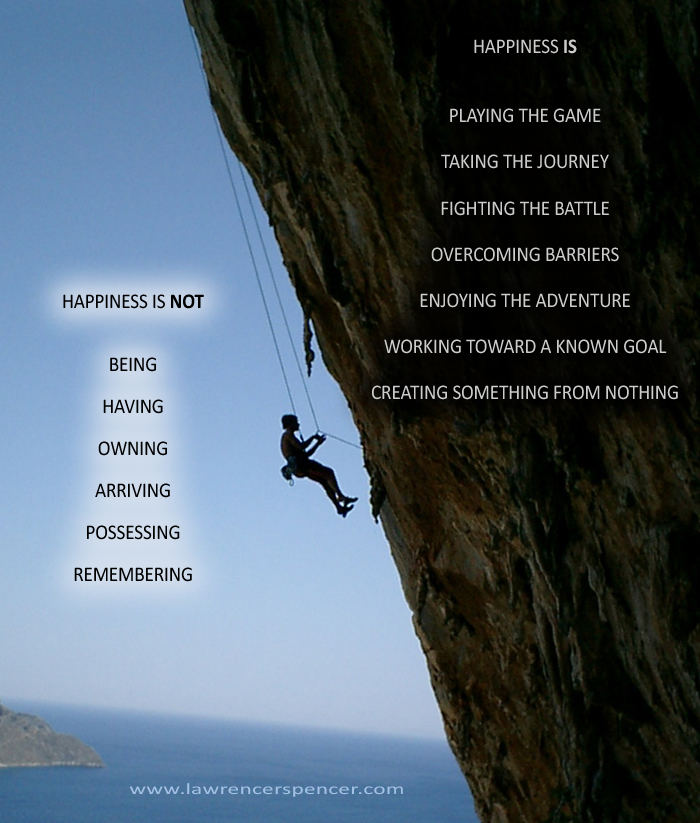
I have been thinking a lot about “happiness” recently. There are many different definitions of this word. In an English language dictionary defines “happiness” as:
elatedness, elation, exhilaration, exultation, high,intoxication; ecstasy, euphoria, glory, heaven, nirvana,paradise, rapture, rapturousness, ravishment, seventh heaven, transport; delectation, delight, enjoyment,pleasure; cheer, cheerfulness, comfort, exuberance,gaiety (also gayety), gladsomeness, glee, gleefulness,jocundity, jollity, joyfulness, joyousness, jubilance,jubilation, lightheartedness, merriness, mirth; content,contentedness, gratification, satisfaction, triumph.
Here are a few ideas I have about what happiness is, and what it is not….
Republished by Blog Post Promoter
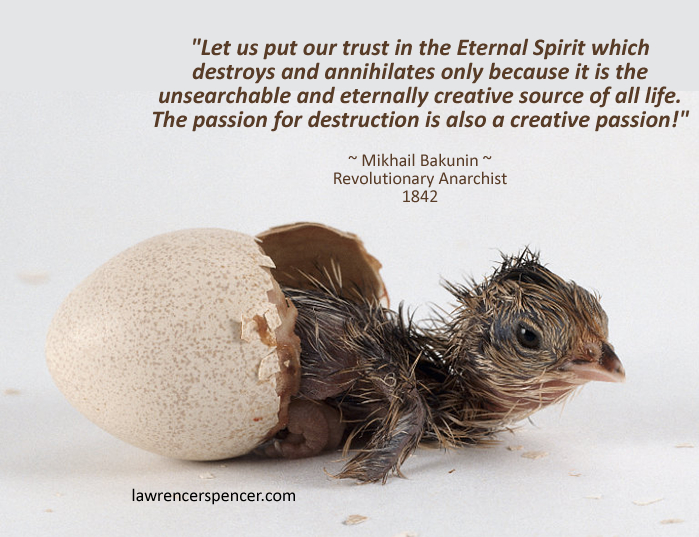 I never studied anything about “anarchism” because I had a misconception that it had to do with advocating social chaos. I was surprised to discover that the origins and philosophy that are the foundations of this ideology are based on a deep spiritual understanding.
Chronologically the earliest anarchist themes can be found in the 6th century BC, among the works of Taoist philosopher Laozi and in later centuries by Zhuangzi and Bao Jingyan.
Zhuangzi wrote, “A petty thief is put in jail. A great brigand (criminal) becomes a ruler of a Nation.”
Diogenes of Sinope (404 BCE – 323 BCE) was a Greek philosopher and one of the founders of Cynic philosophy.
Their contemporary Zeno of Citium, the founder of Stoicism, also introduced similar topics.
Jesus Christ is sometimes considered the first anarchist in the Christian anarchist tradition. “The true founder of anarchy was Jesus Christ and … the first anarchist society was that of the apostles.” — Georges Lechartier
A political ideology named “collective anarchism” was created by Mikhail Bakunin (30 May 1814 – 1 July 1876). He was a Russian revolutionary anarchist, and founder of one of the many different political ideologies that are considered to be anarchism in the 19th century.
“Let us put our trust in the eternal spirit which destroys and annihilates only because it is the unsearchable and eternally creative source of all life–the passion for destruction is also a creative passion!” — Mikhail Bakunin (Reaction in Germany, 1842)
“They [the Marxists] maintain that only a dictatorship—their dictatorship, of course—can create the will of the people, while our answer to this is: No dictatorship can have any other aim but that of self-perpetuation, and it can beget only slavery in the people tolerating it; freedom can be created only by freedom, that is, by a universal rebellion on the part of the people and free organization of the toiling masses from the bottom up.” —Mikhail Bakunin, Statism and Anarchism
Republished by Blog Post Promoter