Republished by Blog Post Promoter
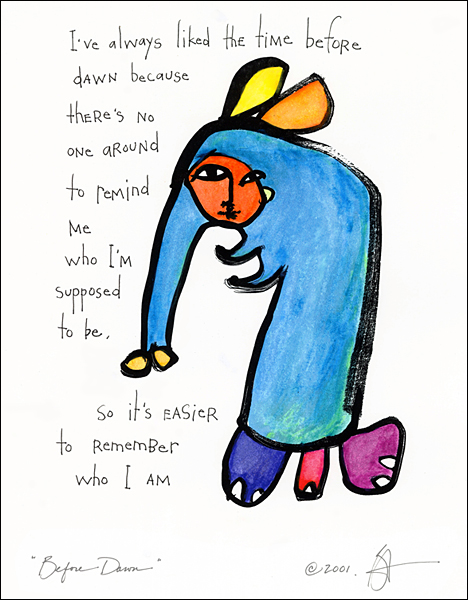

cartoons posted by Lawrence R. Spencer
Republished by Blog Post Promoter
Republished by Blog Post Promoter
Gumball Wars from Scott Thierauf on Vimeo.
Republished by Blog Post Promoter
Republished by Blog Post Promoter

If you are a fan of the greatest cartoon series every created, “CALVIN and HOBBES”, you will enjoy this great tool! You can search the entire database of Calvin and Hobbes cartoon by Key Word. Thanks to Bill Watterson for the amazing cartoons, and to Michael Yingling for the search engine!
http://michaelyingling.com/random/calvin_and_hobbes/
 Calvin and Hobbes is a daily comic strip that was written and illustrated by American cartoonist Bill Watterson, and syndicated from November 18, 1985, to December 31, 1995. It follows the humorous antics of Calvin, a precocious, mischievous, and adventurous six-year-old boy, and Hobbes, his sardonic stuffed tiger. The pair are named after John Calvin, a 16th-century French Reformation theologian, and Thomas Hobbes, a 17th-century English political philosopher.At the height of its popularity, Calvin and Hobbes was featured in over 2,400 newspapers worldwide. Nearly 45 million copies of the 18 Calvin and Hobbes books have been sold. Calvin and Hobbes is set in the contemporary United States in an unspecified suburban area. The strip depicts Calvin’s flights of fantasy and his friendship with Hobbes, and also examines Calvin’s relationships with family and classmates. Hobbes’ dual nature is a defining motif for the strip: To Calvin, Hobbes is a live anthropomorphic tiger; all the other characters see him as an inanimate stuffed toy.
Republished by Blog Post Promoter
 EGO:
EGO:
EGOISM:
PRIDE:
(NOTE: In Christianity, the word “pride” is used negatively, as a “deadly sin”. In other words, God is very jealous and vindictive and is the ONLY being that can exibit pride. Therefore, all of the rest of you ignorant slaves must bow down and worship ME, and ONLY ME!!! (If you do not, I (god) will strike you down with a bolt of lightning!!!) )
Aristotle identified pride (megalopsuchia, variously translated as proper pride, greatness of soul and magnanimity)as the crown of the virtues, distinguishing it from vanity, temperance, and humility, thus:
ETHICAL EGOISM:
Ethical egoism can be broadly divided into three categories: individual, personal, and universal. An individual ethical egoist would hold that all people should do whatever benefits “my” (the individual) self-interest; a personal ethical egoist would hold that he or she should act in his or her self-interest, but would make no claims about what anyone else ought to do; a universal ethical egoist would argue that everyone should act in ways that are in their self-interest.
Philosopher Friedrich Nietzsche suggested that egoistic or “life-affirming” behavior stimulates jealousy or “resentment” in others, and that this is the psychological motive for the altruism in Christianity. Sociologist Helmut Schoeck similarly considered envy the motive of collective efforts by society to reduce the disproportionate gains of successful individuals through moral or legal constraints, with altruism being primary among these. In addition, Nietzsche (in Beyond Good and Evil) and Alasdair MacIntyre (in After Virtue) have pointed out that the ancient Greeks did not associate morality with altruism in the way that post-Christian Western civilization has done. Aristotle‘s view is that we have duties to ourselves as well as to other people (e.g. friends) and to the polis as a whole. The same is true for Thomas Aquinas, Christian Wolff and Immanuel Kant, who claim that there are duties to ourselves as Aristotle did, although it has been argued that, for Aristotle, the duty to one’s self is primary.
Ethical egoism has been alleged as the basis for immorality. Egoism has also been alleged as being outside the scope of moral philosophy. Thomas Jefferson writes in an 1814 letter to Thomas Law: “Self-interest, or rather self-love, or egoism, has been more plausibly substituted as the basis of morality. But I consider our relations with others as constituting the boundaries of morality. With ourselves, we stand on the ground of identity, not of relation, which last, requiring two subjects, excludes self-love confined to a single one. To ourselves, in strict language, we can owe no duties, obligation requiring also two parties. Self-love, therefore, is no part of morality. Indeed, it is exactly its counterpart.”
Definition Sources: Wikipedia.org
