Category Archives: MOVING PICTURES

YouTube Channel for the book “Alien Interview”, edited by Lawrence R. Spencer

GAME OF PSYCHOPATHS

Republished by Blog Post Promoter

I am 2 years older than George RR Martin, the American author who spawned the Game of Thrones HBO television series. I was required to register for the US military “draft” (compulsory military conscription) when I turned 16 years old in 1962 by which time the Vietnam war had already been engaged for 7 years. (REFERENCE– https://en.wikipedia.org/wiki/Vietnam_War )

Like George, I registered for the “draft” as a “Conscientious Objector” because I believe that killing sentient beings is inherently barbaric and counter-survival for all beings.

The “Game of Thrones” TV series thoroughly visualizes the nature of PSYCHOPATHS who thrive on murder, lies, sexual perversion, pain, greed, treachery, and lust for personal power as the common denominator of those beings who aspire to be the “rulers” of men.

I was not immediately “drafted” into the Army because I was enrolled in college, which gave me a “deferment” from the draft. Meanwhile, many of my high school classmates who did not go to college went to Vietnam and were killed or wounded.

I soon became a member of the “anti-war movement”.  I went to the California state capital building and tore up my “draft card”.  I was certain that I would be arrested and imprisoned for not less than 4 years for this action.

However, two weeks later I received a letter from my local “draft board” which ordered me to report to the Oakland-Alameda Army Induction Center. I reported as ordered. I entered the induction center and began handing out anti-war leaflets to the naked men (18 year olds) who were standing in line to be processed into becoming “meat” for the war machine. An FBI agent pulled me aside and “interviewed” me for half an hour in a private office. I did not say a single word or answer any questions. He decided I was “insane” and told me to go home.  Two years later I was married with a child and declared “exempt” from the military.  Weird. The “logic” of the situation boggles the mind…..

All wars, in every era and universe, are created for the private interests of secret provocateurs who are cowards and parasites (bankers, politicians and other vicious psychopaths) of which Vietnam was just another instance of using public citizens to enable private greed and power.  The war in Vietnam was provoked and financed by the Rothschild bankers and the “military-industrial-complex” (and their political minions) who wanted to control OIL and DRUGS production in the “Golden Triangle” of Southeast Asia.

Later, Afghanistan (and the Middle East) was invaded for by these same psychopaths to secure oil, natural gas, vast mineral mining reserves, opium, and strategic military positioning.

Since then the US military has been usurped to become the “global police force” for these same psychopaths.  The Rothschild Zionist state of Israel covertly leads the way in Western politics to control the military might necessary to ensure that “the meek (cowards) shall inherit the Earth”.

The “Game of Thrones” is a metaphor. It is a cliche for every “civilization” of humans who ever existed and destroyed themselves, throughout time in the physical universe.

When we read the book ALIEN INTERVIEW we become aware that immortal human-like beings have existed for trillions of years throughout the physical universe. The same “parasite games” have been played again and again and again and again in the Eternal Now.

The vast majority of beings are honest and decent — they want to live peacefully and calmly.  A tiny percent of beings are vicious, destructive predators and parasites — they are the “rulers” who  aspire to occupy “The Throne”.

A PARASITE (leach, vampire, priest, politician) cannot live without consuming the energy or sucking the blood of a “host” because PARASITES ARE NOT ABLE TO CREATE THEIR OWN ENERGY!

Ironically, when the host dies the parasite dies also. Obviously, Parasites are not only weak, they are stupid…..  Therefore, the solution is to kill the parasites, just like any common virus.  Kill the parasite and the host survives. What could be more obvious?
MAN OF CONSTANT SORROW

Republished by Blog Post Promoter

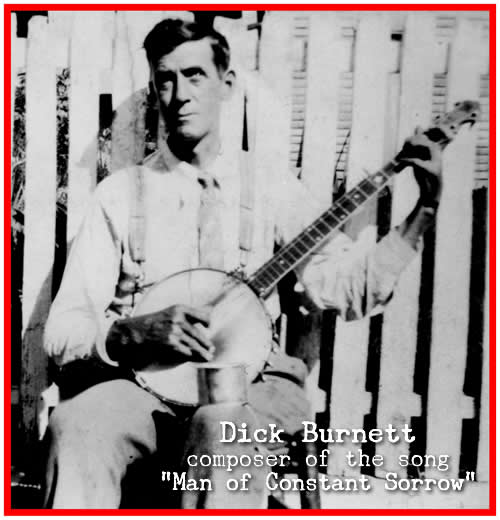
MAN OF CONSTANT SORROW is one of my favorite songs.  It communicates the very real pain that all of the citizens of our Earthly prison experience, to a greater or lesser degree.  The song was originally recorded by Burnett as “Farewell Song” printed in a Richard Burnett songbook, c. 1913.

Written by Richard (Dick) Burnett (October 8, 1883 – January 23, 1977) was an American folk songwriter from Kentucky.  Burnett was born near Monticello, Kentucky. He was known to play the banjo and guitar and was blind in one eye. Burnett allegedly wrote the traditional American folk song, Man of Constant Sorrow, which was later to be covered by Bob Dylan.  He recorded with fiddler Leon Rutherford for Columbia Records.  An early version was recorded by Emry Arthur in 1928. 

The following are subsequent “covers” of the song:

Ralph Stanley (Solo version (cover))   http://youtu.be/fLKltv26-00

Stanley Brothers (cover)     http://youtu.be/ldnZnjGBGXw

Dick Burnett

Original Lyrics to “Farewell Song”  (Man of Constant Sorrow)

I am a man of constant sorrow,

I’ve seen trouble all of my days;
I’ll bid farewell to old Kentucky,
The place where I was born and raised.

Oh, six long year [sic] I’ve been blind, friends.
My pleasures here on earth are done,
In this world I have to ramble,
For I have no parents to help me now.

So fare you well my own true lover,
I fear I never see you again,
For I’m bound to ride the Northern railroad,
Perhaps I’ll die upon the train.

Oh, you may bury me in some deep valley,
For many year [sic] there I may lay.
Oh, when you’re dreaming while you’re slumbering
While I am sleeping in the clay.

Oh, fare you well to my native country,
The place where I have loved so well,
For I have all kinds of trouble,
In this vain world no tongue can tell.

Dear friends, although I may be a stranger,
My face you may never see no more;
But there’s a promise that is given,
Where we can meet on that beautiful shore.

________________________________________________

Dick Burnett Biography on Wikipedia.org

Burnett was born near Monticello, Kentucky. He was known to play the banjo and guitar and was blind in one eye.  Burnett was born near the end of the nineteenth century on October 8, 1883, in the area around the head of Elk Springs, about seven miles north of Monticello. He remembered little of his farming parents. His father died when he was only four and his mother died when he was twelve. Burnett did say that his mother told him how his father would carry him in his arms when he was only four years old and he would help his dad sing. It is notable that Burnett’s grandparents were of German and English descent and that particular ancestral influence would be instrumental in forming Burnett’s musical career. At seven-years-old, Burnett was playing the dulcimer; at nine he was playing the banjo, and at thirteen he had learned to play the fiddle.

Richard Burnett’s life took a drastic turn in early adulthood when he was attacked by a robber, shot in the face, and lost his eyesight. He was working in the oil field of central Kentucky, married with a young child, and now faced an uncertain future. Almost prophetically, his boss made the following statement to Burnett: “Well, you can still make it; you can make it with your music.”

In time, Burnett joined forces with a young fourteen-year-old orphaned boy from Somerset. That young boy, Leonard Rutherford, would become Burnett’s student and became one of the “smoothest” fiddle players known to come from Kentucky.

Richard Burnett, “blind minstrel of Monticello” and Leonard Rutherford, “one of the smoothest fiddlers ever to take a bow,” soon were singing at every opportunity. They appeared on courthouse lawns and on the street playing and singing their music. In order to earn some money, Richard would strap a tin cup to his knee to collect the contributions from a satisfied crowd.

They traveled by bus, Model A, and on foot to any place they could and sing. From about 1914 until 1950, the pair became so popular that they found themselves in the company of most all the popular mountain musicians of the time. They were “at home” in the presence of greats like the Carter Family, Charlie Oaks, Arthur Smith, and many others. They appeared at the Renfro Valley Barn Dance, on radio stations in Cincinnati, and finally, they would be some of the first old-time musicians to enter the recording studios.

Burnett and Rutherford made their first commercial recording in 1926 for Columbia Records in Atlanta, Georgia. “They gave us sixty dollars a record and paid all our expenses from here to Atlanta and back, hotel bills and everything,” Burnett reminisced. This unique banjo-fiddle-playing team, at times joined by banjoist W.L. Gregory and his fiddle-playing brother Jim, also of Monticello, continued to record for Columbia (and Gennett as well), through 1930.

Many of the songs Burnett and Rutherford used in their performances were songs they had learned from others in the past. When Burnett was asked where he learned some the old songs he recorded, he indicated some of them came from “Negroes around playing old time music” in Wayne County. He mentioned “Bled Coffey here in town, he was a fiddler during the Civil War, and the Bertram boys here, Cooge Bertram was a good fiddler…..Yes sir, there were a lot of black men playing old-time music. Bled Coffey was the best fiddler in the country.”

Burnett was a prolific songwriter as well as an instrumentalist. Possibly his most well known song is the popular “Man Of Constant Sorrow” that found notoriety in the movie, “O Brother, Where Art Thou.” On one occasion when asked if he wrote the song, Burnett replied: “No, I think I got that ballet from somebody—I dunno. It may be my song…..”

It has been correctly observed about Richard Burnett: “He was a valuable link to country music’s folk past and was a repository of material which he had both preserved and rewritten: “Pearl Bryan,” “Short Life of Trouble,” “Weeping Willow Tree,” “Little Stream of Whisky,” and many other ballads known to all folk revivalists.” The team certainly deserves the title of “one of the most colorful and rewarding groups of the 1920s.”

Richard Burnett died in Somerset, Kentucky on January 23, 1977, probably without ever realizing the great influence he had in the field of old-time Appalachian music.

AMOUR

Republished by Blog Post Promoter

The loss of the person whom you love and cherish the most in your life is an agony beyond imagining. Yet, to allow them to endure interminable suffering, is the most brutal cruelty, and insantity.  If you truly love someone, the only sane and merciful act is to free them from their pain.  This pain may be imprisonment within an unwanted relationship, or from a crippled and decaying body.  

In Life, and in Death, Freedom is more important than Love.

OPCC_01_AMOUR_8.14_Layout 1

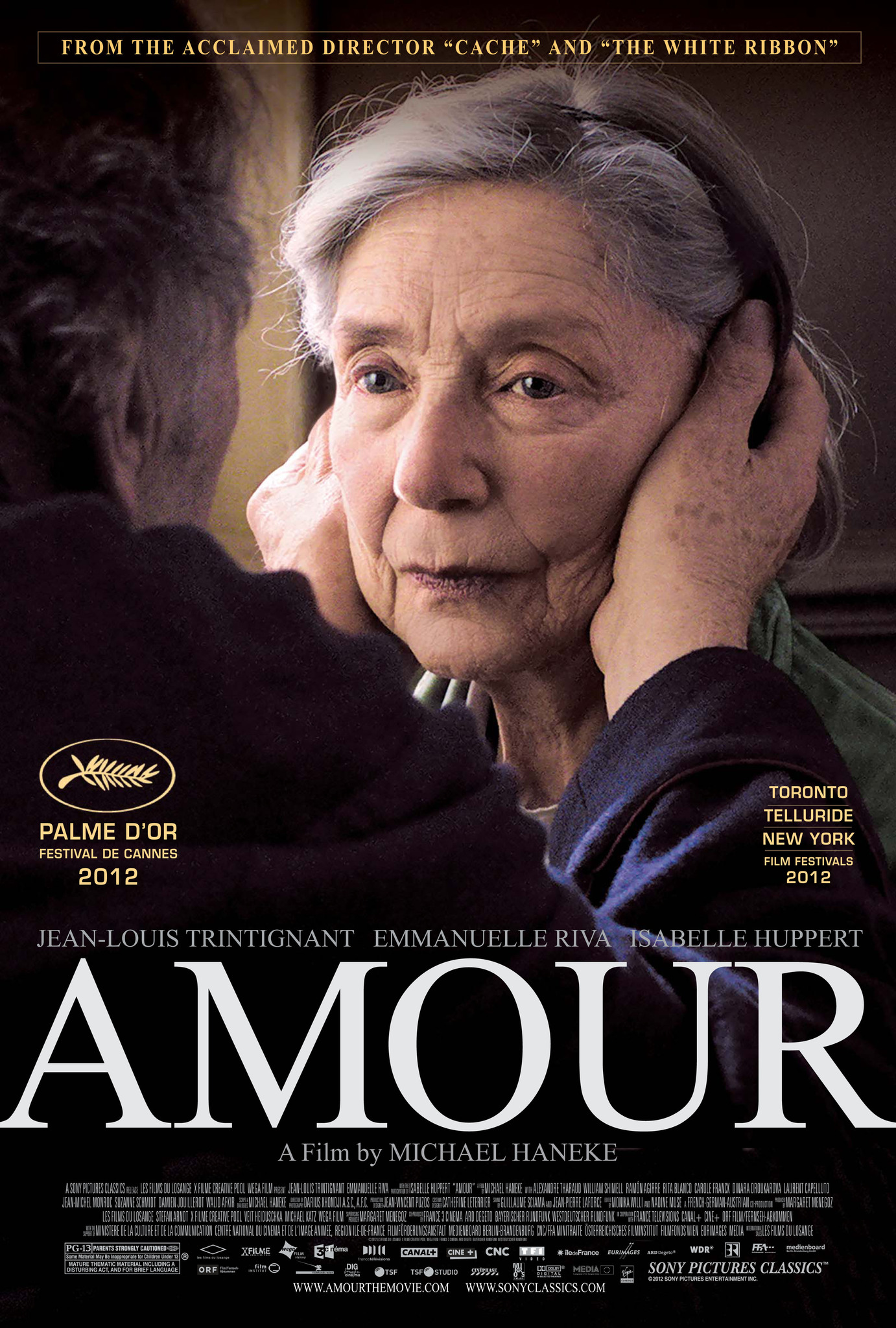
Amour (pronounced: [a.muʁ]; French for “Love”) is a 2012 French-language drama film.  The narrative focuses on an elderly couple, Anne and Georges, who are retired music teachers with a daughter who lives abroad. Anne suffers a stroke which paralyses her on one side of her body. The film was screened at the 2012 Cannes Film Festival, where it won the Palme d’Or. It won the Academy Award for Best Foreign Language Film at the 85th Academy Awards, and was nominated in four other categories: Best Picture, Best Actress in a Leading Role (Emmanuelle Riva), Best Original Screenplay (Michael Haneke) and Best Director (Michael Haneke).  At the age of 85, Emmanuelle Riva is the oldest nominee for the Best Actress in a Leading Role.  At the 25th European Film Awards, it was nominated in six categories, winning in four, including Best Film and Best Director. At the 47th National Society of Film Critics Awards it won the awards for Best Film, Best Director and Best Actress. At the 66th British Academy Film Awards it was nominated in four categories, winning for Best Leading Actress and Best Film Not in the English Language. Emmanuelle Riva became the oldest person to win a BAFTA. At the 38th César Awards it was nominated in ten categories, winning in five, including Best Film, Best Director, Best Actor and Best Actress.