Republished by Blog Post Promoter
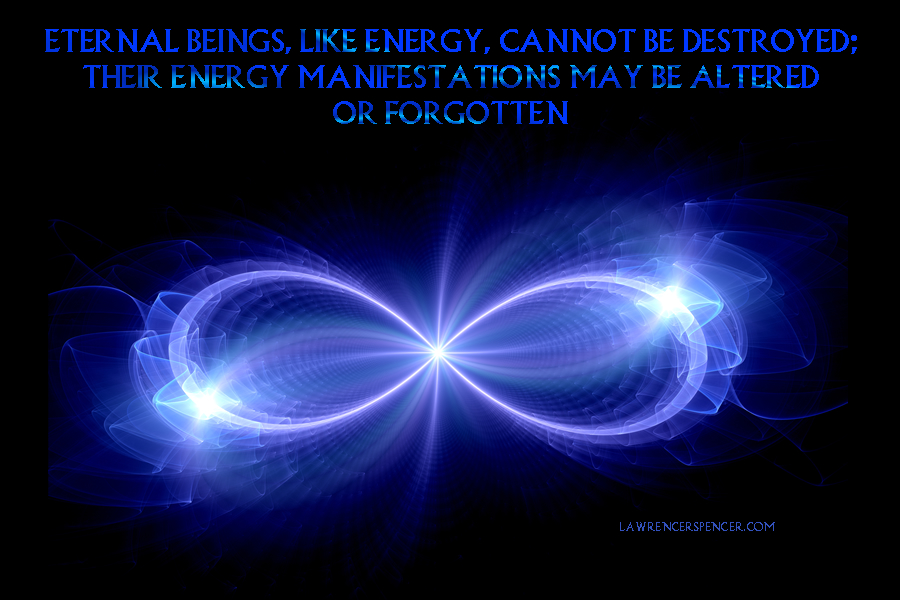 ETERNAL BEINGS, LIKE ENERGY, CANNOT BE DESTROYED; THEIR ENERGY MANIFESTATIONS MAY BE ALTERED OR FORGOTTEN

Free Advice about Life, Universe and Other Stuff from Lawrence R. Spencer
Republished by Blog Post Promoter
ETERNAL BEINGS, LIKE ENERGY, CANNOT BE DESTROYED; THEIR ENERGY MANIFESTATIONS MAY BE ALTERED OR FORGOTTEN
Republished by Blog Post Promoter
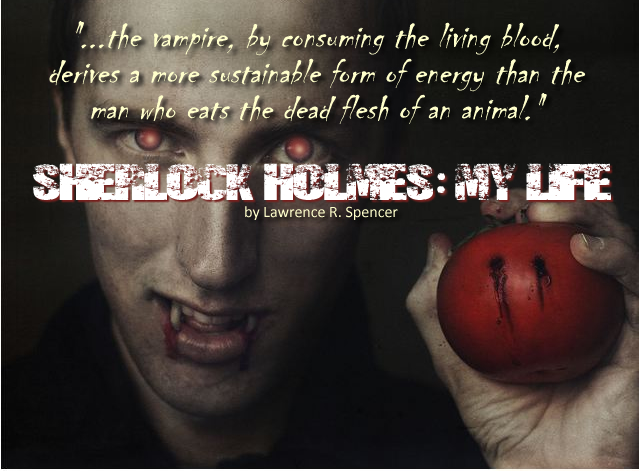
“Count Dracula, and his kindred spirits, may be considered to be “evil” from the point of view of mankind. However, apart from the prejudice of the human victims who do not desire to serve as food for others who drink their blood, the vampire can not be considered to be anything other than an immortal spiritual being, attempting to persist and survive in a quasi-corporeal form.
I esteem that there is only one principle difference between a human being who eats a roasted chicken or pork or beef, and a vampire who drinks the living blood of a human being. That is, that the vampire, by consuming the living blood, derives a more sustainable form of energy than the man who eats the dead flesh of an animal.
The man who eats dead meat lives 65 years, his own spirit is confined inside a fragile piece of flesh, with little or no self-awareness regarding his potential capabilities as a spiritual entity. Whereas, the vampire, consuming only the living blood of its victim, maintains an extreme spiritual power and ability, as well as physical strength and longevity which borders upon immortality!
Who is to say which condition is more or less desirable? There seems to me to be absolutely no limit to the inanity and credulity of the human race. Homo Sapiens! Homo idioticus!
Yet, it is entirely understandable that men do not trouble themselves with grotesque speculations as to the nature of life beyond the grave. They have enough to do in this world. Life is a beautiful thing. The man who appreciates its beauties enjoys a sufficient understanding of life without dabbling in religions or spiritualism.
Religion is a fraud which have been exposed a hundred times and yet priests continue to find fresh crowds of foolish devotees whose insane credulity and superstitious prejudice make them impervious to all rational arguments. One can only leave them to seek destinations of their singular Fates, which they have been predetermined for them.
Unless we practice eternal vigilance against these vampires, we will continue to be afflicted and effected by the contagion of their parasitical insanity. The vitality of every civilization which has crumbled into disrepair and dust was drained of life by these diabolical beings!”
— Excerpted from the book SHERLOCK HOLMES: MY LIFE, by Lawrence R. Spencer

Republished by Blog Post Promoter
Hey, if you’re a vegetarian chef (like me) here’s a really useful tip to speed up your food prep time:
Republished by Blog Post Promoter
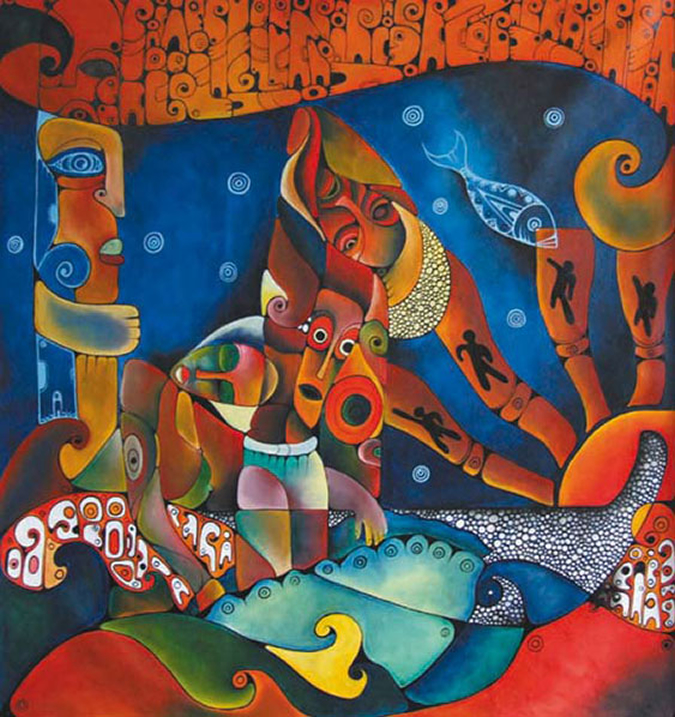
— E. M. Forster, British novelist (1879 – 1970)
English novelist, short story writer, essayist and librettist. He is known best for his ironic and well-plotted novels examining class difference and hypocrisy in early 20th-century British society. Forster’s humanistic impulse toward understanding and sympathy may be aptly summed up in the epigraph to his 1910 novel Howards End: “Only connect … “. His 1908 novel, A Room with a View, is his most optimistic work, while A Passage to India (1924) brought him his greatest success.
Republished by Blog Post Promoter
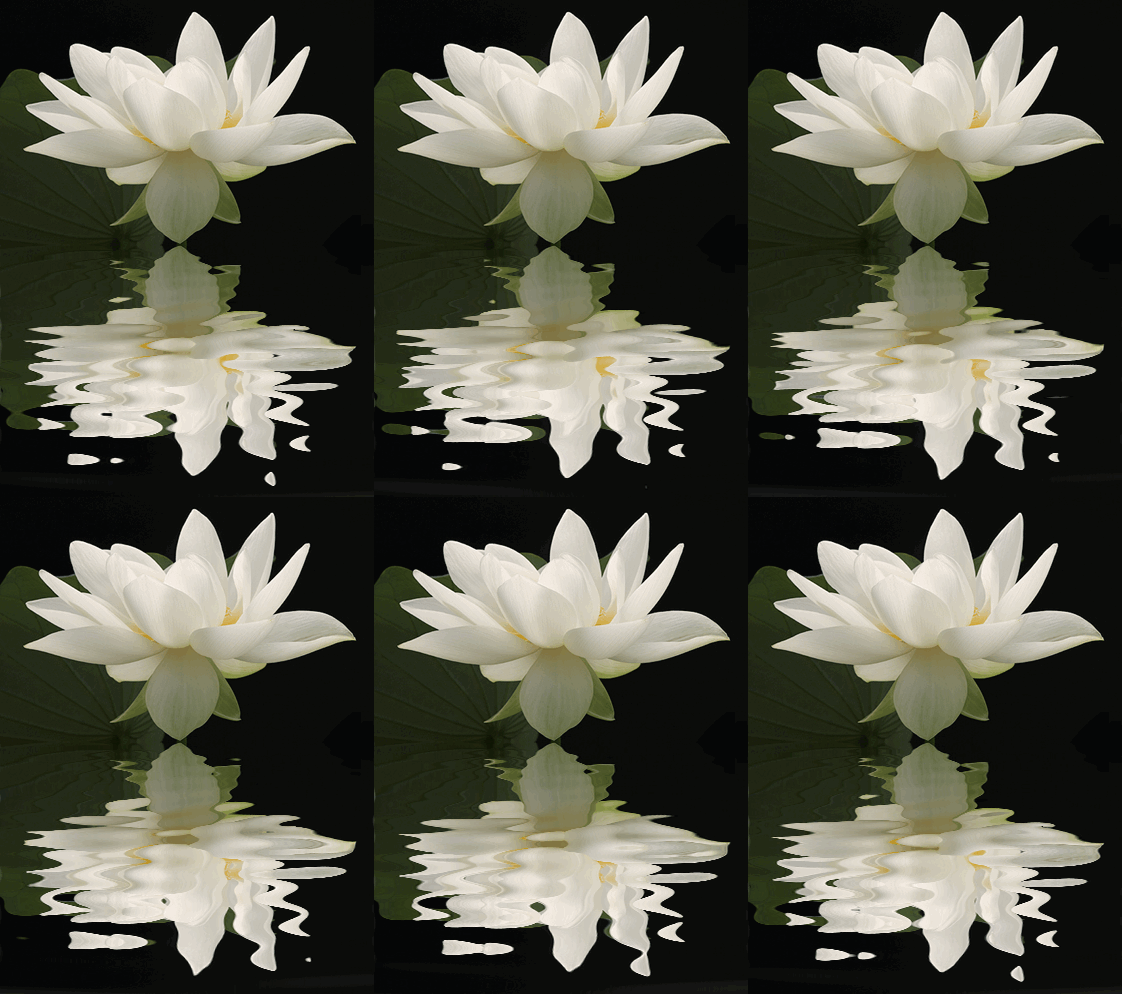 The lotus is an ancient symbol in Asian culture. Often used as an example of divine beauty and purity. Its unfolding petals suggest the expansion of the soul. The growth of its pure beauty from the mud of its origin holds a benign spiritual promise. In Buddhist symbolism the lotus is symbolic of purity of the body, speech, and mind as while rooted in the mud, its flowers blossom on long stalks as if floating above the muddy waters of attachment and desire. It is also symbolic of detachment as drops of water easily slide off its petals.
The lotus in both Egypt and India symbolizes the union of the four elements; earth, air, fire, and water. The roots are in the earth, it grows in and by means of water, its leaves are nourished by air, and it blooms through the power of the sun’s fire. The lotus is therefore the perfection of the fourfold order of the natural world. The growth of a new flower directly from the earth-bound original may be interpreted as a symbol of transcendence as found in Indian philosophy: a spiritual emergence of a higher world directly from our physical manifestation.