CONSTANT CHANGE

Republished by Blog Post Promoter

“The Only Constant is Change.”

CONSTANT CHANGE

Heraclitus of Ephesus (c. 535 BC – 475 BC) was a Greek philosopher, known for his doctrine of change being central to the universe, and for establishing the term Logos (λόγος) in Western philosophy as meaning both the source and fundamental order of the Cosmos.  From the lonely life he led, and still more from the riddling and paradoxical nature of his philosophy and his stress upon the needless unconsciousness of humankind, he was called “The Obscure” and the “Weeping Philosopher”.  He believed in the unity of opposites, stating that “the path up and down are one and the same”, all existing entities being characterized by pairs of contrary properties. His cryptic utterance that “all entities come to be in accordance with this Logos” (literally, “word”, “reason”).

UNIVERSE HAIKU

Republished by Blog Post Promoter

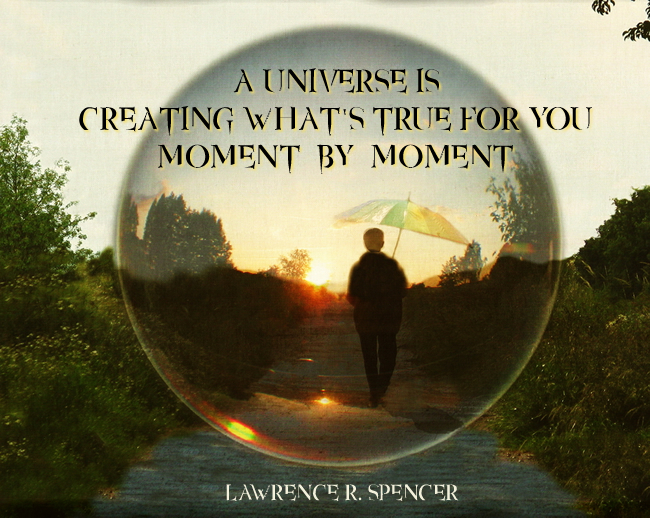
A UNIVERSE IS

CREATING WHAT’S TRUE FOR YOU

MOMENT BY MOMENT

______________________________________________

Definition of “HAIKU” — noun:   an epigrammatic Japanese verse form of three short lines.  In contrast to English verse typically characterized by meter, Japanese verse counts sound units known as “on” or morae. Traditional haiku consist of 17 on, in three phrases of five, seven and five on respectively.