Republished by Blog Post Promoter
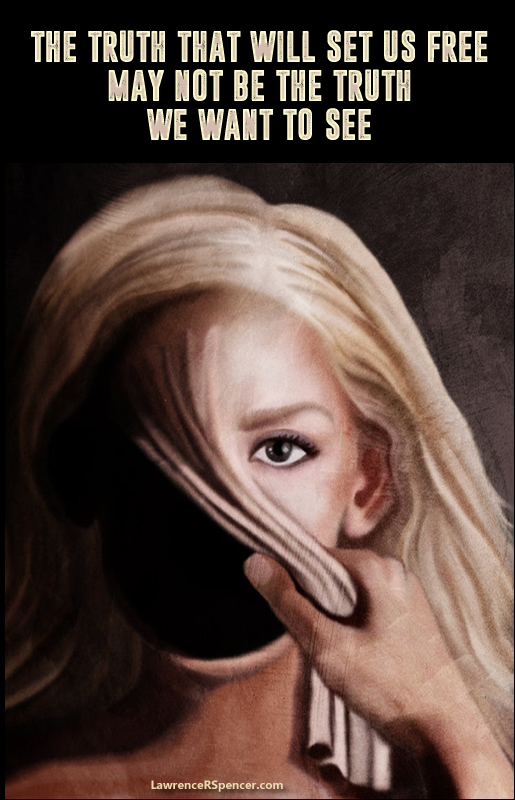 THE TRUTH THAT WILL SET US FREE
MAY NOT BE THE TRUTH WE WANT TO SEE
~ LRS 2015 ~

Poetry by Lawrence R. Spencer. Poetic nonsense by Lawrence R. Spencer and others. Haiku poems by Lawrence R. Spencer.
Republished by Blog Post Promoter
THE TRUTH THAT WILL SET US FREE
MAY NOT BE THE TRUTH WE WANT TO SEE
~ LRS 2015 ~
Republished by Blog Post Promoter
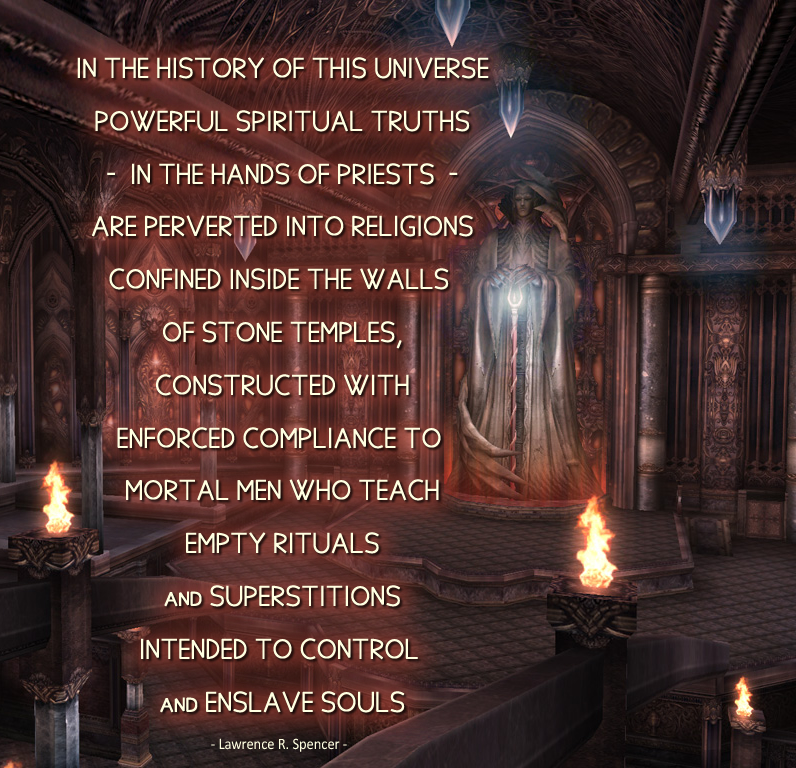
In the history of this universe powerful spiritual truths – in the hands of priests – are perverted into religions confined inside the walls of stone temples constructed with enforced compliance to mortal men who teach empty rituals and superstitions intended to control and enslave souls.
Lawrence R. Spencer. 2001.
Republished by Blog Post Promoter

Republished by Blog Post Promoter
Republished by Blog Post Promoter
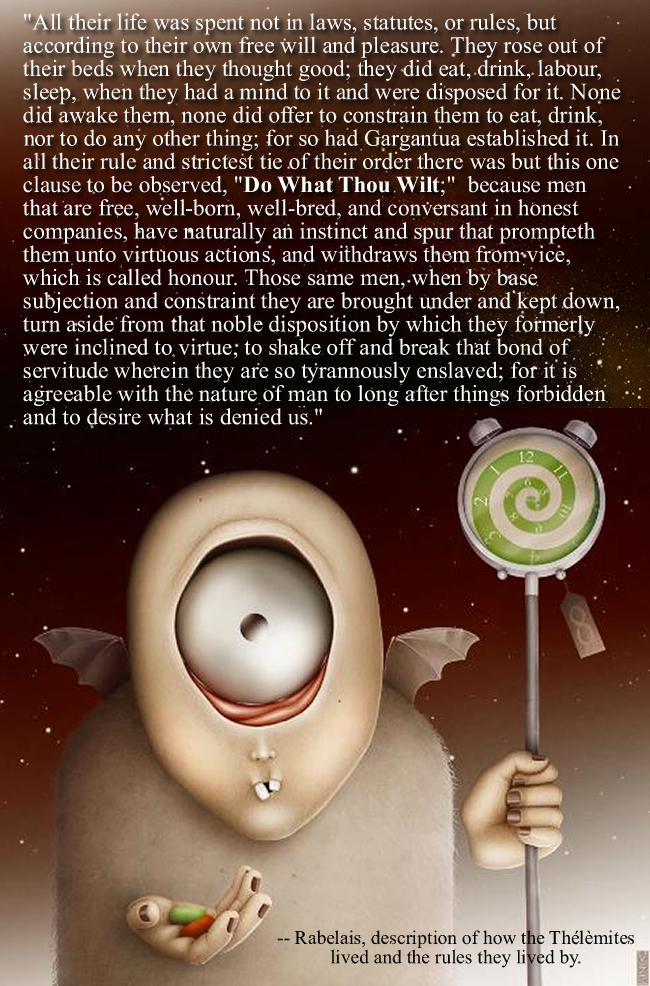
(Image by Marianna Stelmach)
____________________________
François Rabelais (c. 1494 – 9 April 1553) was a major French Renaissance writer, doctor, Renaissance humanist, monk and Greek scholar. He has historically been regarded as a writer of fantasy, satire, the grotesque, bawdy jokes and songs. His best known work is Gargantua and Pantagruel. Rabelais is considered one of the great writers of world literature and among the creators of modern European writing.
____________________________________________
“All their life was spent not in laws, statutes, or rules, but according to their own free will and pleasure. They rose out of their beds when they thought good; they did eat, drink, labour, sleep, when they had a mind to it and were disposed for it. None did awake them, none did offer to constrain them to eat, drink, nor to do any other thing; for so had Gargantua established it. In all their rule and strictest tie of their order there was but this one clause to be observed, “Do What Thou Wilt;” because men that are free, well-born, well-bred, and conversant in honest companies, have naturally an instinct and spur that prompteth them unto virtuous actions, and withdraws them from vice, which is called honour. Those same men, when by base subjection and constraint they are brought under and kept down, turn aside from that noble disposition by which they formerly were inclined to virtue, to shake off and break that bond of servitude wherein they are so tyrannously enslaved; for it is agreeable with the nature of man to long after things forbidden and to desire what is denied us.”
— Rabelais, description of how the Thélèmites lived and the rules they lived by.