Republished by Blog Post Promoter


Poetry by Lawrence R. Spencer. Poetic nonsense by Lawrence R. Spencer and others. Haiku poems by Lawrence R. Spencer.
Republished by Blog Post Promoter
Republished by Blog Post Promoter

“GO TOWARD THE LIGHT!
A lot of people (including a long list of living and dead celebrities) who were pronounced “medically dead” said that they had a “near death experience”. Another common report is that they were immediately “drawn” toward a bright light. For a variety of reasons they decided, or where “told” by another disembodied spirit, to go back to the body. After they returned, the body “came back to life”, and they lived happily ever after – at least until they died again and did NOT come back again. At that time, one assumes they decided to go toward the light and that they did NOT come back, as far as we know.
STAY AWAY FROM THE LIGHT!
Those people decided to stay away from the light and go back to their body. They lived long enough to tell someone about the experience. So, if you want to continue living with a body, this would be the most likely option for you. Otherwise, option #1 is still available, although not necessarily recommended.
———————————-
FOOTNOTE:
Peter Sellers was the comic genius of a generation of actors. He brought brilliant characterizations to numerous films, including “The Mouse That Roared” (1959), “Dr. Strangelove” (1964), “The Pink Panther” (1964), and “Being There” (1979). He was known for his enthusiastic way of totally absorbing himself in his characters, even carrying roles offstage. He also suffered from sad moods between films. While he knew his characters thoroughly, he said that he really did not know who he was. Then Peter Sellers, the brilliant, confused actor, had a near-death experience.
 Seated in a Hollywood mockup of a limousine’s back seat while shooting his last great film, “Being There“, he told Shirley MacLaine about his near-death experience, astonished that she did not consider him “bonkers.” Shirley documents their conversation in her book, Out on a Limb. In 1964, during the first of a rapid series of eight heart attacks, when his heart stopped and he was clinically dead, he had an out-of-body experience and saw the bright, loving light:
“Well, I felt myself leave my body. I just floated out of my physical form and I saw them cart my body away to the hospital. I went with it … I wasn’t frightened or anything like that because I was fine; and it was my body that was in trouble.”
The doctor saw that he was dead and massaged his heart vigorously, Meanwhile: “I looked around myself and I saw an incredibly beautiful bright loving white light above me. I wanted to go to that white light more than anything. I’ve never wanted anything more. I know there was love, real love, on the other side of the light which was attracting me so much. It was kind and loving and I remember thinking “That’s God.””
Peter’s out-of-body soul tried to elevate itself toward the light, but he fell short: “Then I saw a hand reach through the light. I tried to touch it, to grab onto it, to clasp it so it could sweep me up and pull me through it.” But just then his heart began beating again, and at that instant the hand’s voice said: “It’s not time. Go back and finish. It’s not time.” As the hand receded he felt himself floating back down to his body, waking up bitterly disappointed.
What effect did his near-death experience have on Sellers? His biographer says that “The act of “dying” became for Peter Sellers the most important experience of his life.” Sellers said of death: “I’ll never fear it again.” Family and friends found him more spiritual and reflective than before.”
— excerpted from the book 1001 THINGS TO DO WHILE YOU’RE DEAD: A DEAD PERSONS GUIDE TO LIVING
Republished by Blog Post Promoter

Republished by Blog Post Promoter
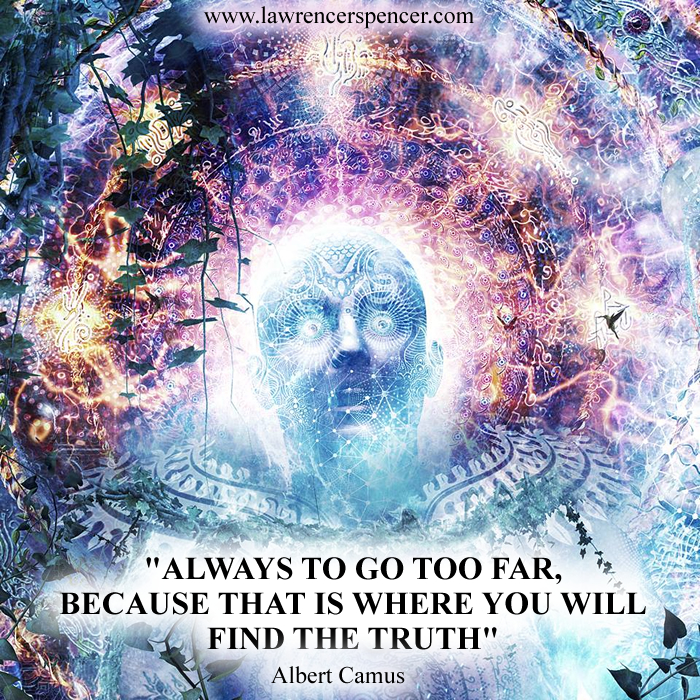
Albert Camus (1913 – 1960) was a French Nobel Prize winning author, journalist, and philosopher, described as the ″James Dean of philosophy″. Throughout his life, Camus spoke out against and actively opposed Totalitarianism in its many forms. Early on, Camus was active within the French Resistance to the German occupation of France during World War II, even directing the famous Resistance journal, Combat. On the French collaboration with Nazi occupiers he wrote: “Now the only moral value is courage, which is useful here for judging the puppets and chatterboxes who pretend to speak in the name of the people.”
Camus presents the reader with dualisms such as happiness and sadness, dark and light, life and death, etc. He emphasizes the fact that happiness is fleeting and that the human condition is one of mortality; for Camus, this is cause for a greater appreciation for life and happiness. In Le Mythe, dualism becomes a paradox: we value our own lives in spite of our mortality and in spite of the universe’s silence. While we can live with a dualism (I can accept periods of unhappiness, because I know I will also experience happiness to come), we cannot live with the paradox (I think my life is of great importance, but I also think it is meaningless). In Le Mythe, Camus investigates our experience of the Absurd and asks how we live with it. Our life must have meaning for us to value it. If we accept that life has no meaning and therefore no value, should we kill ourselves?
Republished by Blog Post Promoter