Republished by Blog Post Promoter
 You’ve heard about the “law of attraction” and “the secret”? Maybe what you DON’T know is that these recent books and films are modern day rip-offs and watered-down spin offs from earlier books written about these subject of “animal magnetism” and the “science of being”.
The most prolific writer and proponent of so-called “NEW AGE” literature in the United States was WILLIAM WALKER ATKINSON (December 5, 1862 – November 22, 1932), including the book “LAW OF ATTRACTION” published in 1906. He wrote more than 100 books on the subject of the “NEW THOUGHT” movement. Where did Atkinson get his ideas? Who influenced him? Here are article from Wikipedia that trace the origins and influences of the “NEW AGE MOVEMENT”. http://en.wikipedia.org/wiki/William_Walker_Atkinson
Atkinson learned about “animal magnetism” from Phineas Quimby: http://en.wikipedia.org/wiki/Phineas_Quimby
Phineas Quimby learned about it from Armand Marie Jacques de Chastenet, Marquis of Puységur. He was a contemporary of Benjamin Franklin, who also was appointed to a committee in France to study the subject of “animal magnetism“. http://en.wikipedia.org/wiki/Armand-Marie-Jacques_de_Chastenet,_Marquis_of_Puys%C3%A9gur
Armand learned about it from the study of “animal magnatism” or “mesmerism” or “hypnosis” from a German scientist named Franz Mesmer: http://en.wikipedia.org/wiki/Franz_Mesmer (who was a friend of Wolgang Mozart)
Frans Mesmer (May 23, 1734 – March 5, 1815) was a German physician with an interest in astronomy, who theorised that there was a natural energetic transference that occurred between all animated and inanimate objects that he called animal magnetism, sometimes later referred to as mesmerism. The theory attracted a wide following between about 1780 and 1850, and continued to have some influence until the end of the century.[2] In 1843 the Scottish physician James Braid proposed the term hypnosis for a technique derived from animal magnetism; today this is the usual meaning of mesmerism. The “science” of “animal magnetism” described in this article: http://en.wikipedia.org/wiki/Animal_magnetism
In 1766 he published a doctoral dissertation with the Latin title De planetarum influxu in corpus humanum (On the Influence of the Planets on the Human Body), which discussed the influence of the Moon and the planets on the human body and on disease.
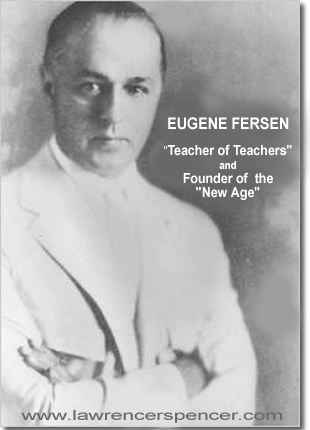 Baron Eugene Fersen, ‘The Teacher of The Teachers,’ launched in his time the greatest ‘Human Potential Movement’ that would later become the inspiration for what he called, the ‘New Age.’
Baron Eugene Fersen was born November 18th, 1873 in Saint Petersburg, Russia. He began teaching by the early 1890’s and went to the great beyond on April 24th, 1956. He was the eldest son of a Grand Duchess of Russia/Poland. His mother knew before his birth that he was to be a guiding light for the people of this World; she called him Svetozar, meaning The Lightbearer.
The Baron’s mother saw to it that her son had the proper teachers and education that would assist and support the Absolute Eternal Aspects of his Soul so as to fulfill his divine destiny. Eugene’s uncle was Count Leo Tolstoy, the writer famously known for his renowned literary works War and Peace and Anna Karenina. Tolstoy was one of Mohandas Gandhi’s greatest influences and friend.
Baron Fersen came to the United States for his second lecture tour in 1904 to share his already popularized teachings and lessons known as the Science Of Being. From the late 1800s, Eugene’s teachings taught or influenced many of the great thinkers, writers, inventors and leaders of the 19th and 20th centuries. Here are a few of the highly influential people he taught:
Charles Francis Haanel (May 22, 1866 – November 27, 1949) (The Master Key System)
Elizabeth Towne (Author of The Life Power and How to Use it is shown in the opening sequence of the 2006 movie The Secret. The film presents many of the ideas that she promoted, along with those of Wallace Wattles and William Walker Atkinson.)
Wallace D. Wattles (1860–1911) (The Science Of Getting Rich and The Science Of Being Well)
Edgar Cayce (March 18, 1877 – January 3, 1945) was an American mysticwho possessed the ability to answer questions on subjects as varied as healing, reincarnation, wars, Atlantis and future events while in a trance. Cayce founded a nonprofit organization, the Association for Research and Enlightenment.
Annie Besant (Translator of the Bhagavad Gita, Theosophist, and Leader of Woman’s Rights)
Huna Max Freedom Long (great teacher of the Huna ways and teacher to the founders of the Course In Miracles, a book by Helen Schucman with portions transcribed and edited by William Thetford containing a self-study curriculum about spiritual transformation.)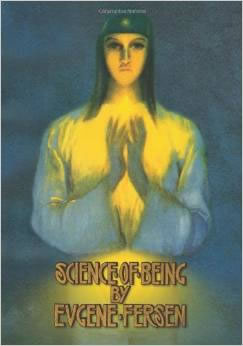
Charles Sherlock Fillmore (August 22, 1854 – July 5, 1948) founded Unity, a church within the New Thought movement, with his wife, Myrtle Page Fillmore, in 1889. He became known as an American mystic for his contributions to spiritualist interpretations of Biblicalscripture.
Samuel Langhorne Clemens (November 30, 1835 – April 21, 1910),better known by his pen name Mark Twain, was an American author and humorist. He wrote The Adventures of Tom Sawyer (1876) and its sequel, Adventures of Huckleberry Finn (1885),the latter often called “the Great American Novel.”
William Walker Atkinson (December 5, 1862 – November 22, 1932) wrote more than 100 groundbreaking “self-help” books in the last 30 years of his life. Hewas one of the three Initiates of the *Kybalion: Hermetic Philosophy is a 1908 book claiming to be the essence of the teachings of Hermes Trismegistus, published under the pseudonym of “The Three Initiates”. http://en.wikipedia.org/wiki/Kybalion
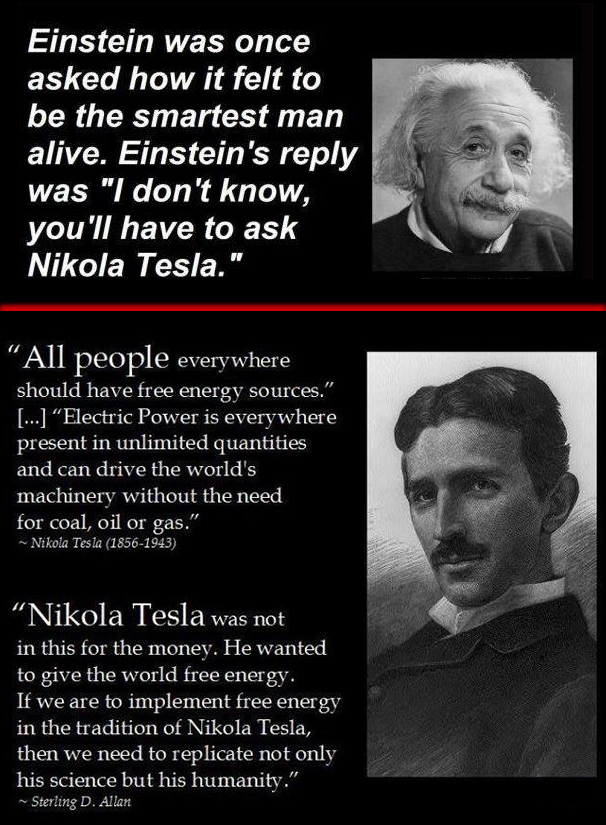
Nikola Tesla (10 July 1856 – 7 January 1943) was a Serbian-American inventor, electrical engineer, mechanical engineer, and futurist best known for his contributions to the design of the modern alternating current (AC) electricity supply system, and MANY other of the most important inventions of the 19th and 20th Century. Most important is his invention of a source of Free Electrical Energy, which has been brutally suppressed by the oil industry and banking interests for 100 years.
Manly P. Hall (March 18, 1901 – August 29, 1990) Canadian-born author and mystic. He is best known for his 1928 work The Secret Teachings of All Ages.
Rudolph Steiner (25/27 February 1861– 30 March 1925) was an Austrian philosopher, social reformer,architect, and esotericist. Steiner published philosophical works including The Philosophy of Freedom. At the beginning of the twentieth century, he founded a spiritual movement, Anthroposophy, other influences include Goethean science and Rosicrucianism. see http://en.wikipedia.org/wiki/Rudolf_Steiner
 Earth
Earth